


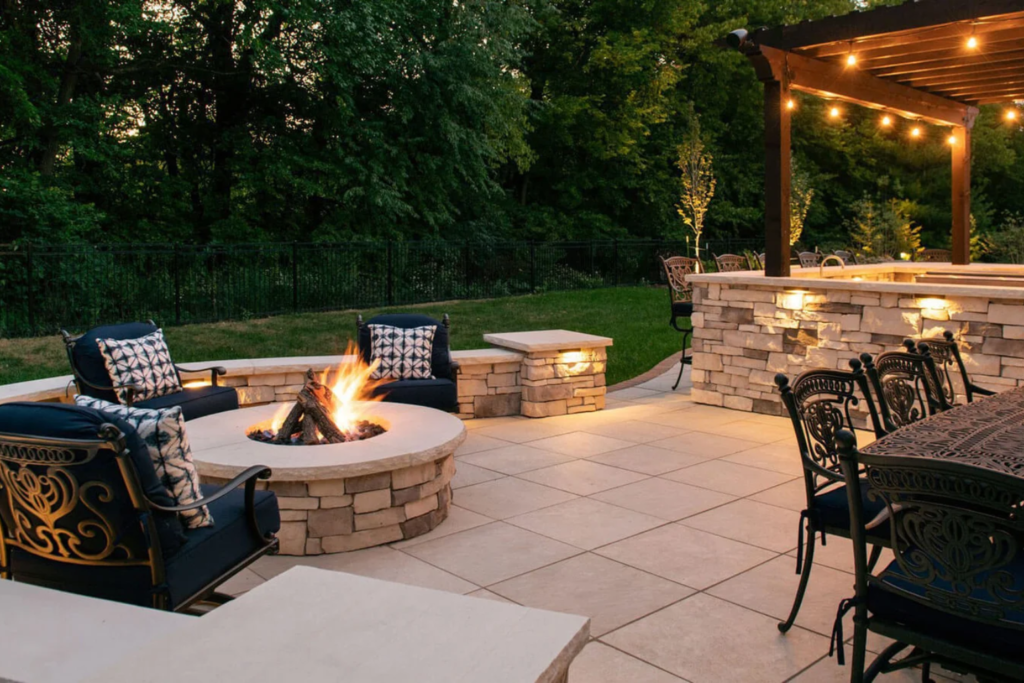
The strength, appearance, and lifespan of patios, walkways, and retaining walls often depend on the materials placed beneath and around them. Professionals involved in hardscaping near me projects select materials carefully so outdoor structures remain stable through weather, foot traffic, and long-term exposure to the elements.
Concrete Blocks Used for Strong Retaining Walls
Retaining walls often support soil that would otherwise shift downhill after heavy rain or landscaping changes. Concrete blocks provide the strength needed to hold back that pressure while maintaining a uniform shape. These blocks are manufactured to lock together, allowing walls to remain stable even when supporting heavy soil loads. Engineered retaining wall blocks also allow builders to create curved or stepped walls that follow the natural slope of the yard. Hardscape contractors near me frequently rely on these materials because they provide both structural support and a clean visual finish. In areas like hardscape contractors Huntsville AL projects, retaining wall blocks often help stabilize hillsides while creating usable outdoor space.
Crushed Stone Used As a Stable Base Under Patios
Patios require a solid foundation beneath their visible surface. Crushed stone forms a compact layer that helps distribute weight evenly across the patio area. Without this base, pavers or slabs may shift over time as soil settles or moisture changes the ground beneath. Professional hardscapers near me install several inches of crushed stone before placing pavers or stone surfaces. The material compacts tightly while still allowing small amounts of water to pass through, which helps prevent pooling under the patio. This balance of strength and drainage makes crushed stone one of the most widely used materials in hardscaping near me projects.
River Rock Added for Natural Drainage Areas
River rock often appears in landscape beds and drainage areas where water must move away from structures. The smooth stones create small gaps between each rock, allowing water to pass through easily while preventing soil erosion. These areas often appear near downspouts, garden beds, or along the edges of patios. Landscape designers working with hardscape companies near me use river rock to guide water away from foundations and outdoor features. The rounded appearance also blends naturally with plants and trees, making drainage solutions look intentional rather than purely functional.
Sand Bedding Placed Under Pavers for Leveling
Paver patios and walkways depend on a precise leveling layer to keep the surface flat and stable. Sand bedding fills small gaps between the crushed stone base and the paver surface. This thin layer allows installers to adjust each paver slightly until the entire surface sits evenly. Installers working on hardscape contractors near me projects spread sand across the base before laying pavers. The sand helps distribute weight and supports minor adjustments during installation. Over time, sand between pavers also helps lock them in place as joint sand fills the gaps.
Pressure Treated Timber for Garden Borders
Wood elements sometimes appear in hardscape designs, particularly when defining garden edges or raised planting beds. Pressure treated timber resists moisture damage and insect activity, making it suitable for outdoor conditions. Garden borders built with treated lumber help separate planting areas from lawns, pathways, or patios. Hardscapers near me often install these borders to create structure within landscape designs. The wood provides a natural appearance while still offering durability for long-term outdoor use.
Clay Brick Used in Classic Walkway Designs
Brick walkways remain a popular choice for traditional landscape designs. Clay bricks provide warm color tones and a familiar pattern that complements both modern and historic homes. These bricks are fired at high temperatures, which makes them strong enough to handle foot traffic for many years. Builders working with hardscape companies near me often install brick pathways in patterns such as running bond or herringbone. These layouts increase stability while creating visual interest. Brick surfaces also allow easy repairs since individual bricks can be replaced if damage occurs.
Landscape Fabric Placed Beneath Stone Layers
Stone pathways and decorative gravel beds require protection from weed growth. Landscape fabric acts as a barrier between the soil and the stone layer above it. The fabric allows water to pass through while preventing weeds from pushing upward through the stones.
Professionals involved in hardscaping near me projects place fabric before spreading gravel or decorative stone. This layer helps maintain a cleaner appearance over time while reducing maintenance for property owners.
Granite Chips Used in Decorative Path Surfaces
Granite chips provide a textured surface often used for garden paths or decorative walkways. The small pieces of crushed granite compact together to create a firm walking surface while still allowing rainwater to drain through the path.
Hardscape contractors Huntsville AL projects frequently incorporate granite chips where a natural appearance is desired. These materials work well in gardens, park-style paths, or informal walkways that blend with surrounding landscaping.
Mortar Used to Secure Stone in Permanent Builds
Certain stone features require stronger bonding than simple stacking or dry placement. Mortar creates a permanent bond between stones, allowing builders to construct features such as stone steps, outdoor fireplaces, and solid masonry walls. Installers working with hardscape contractors near me apply mortar between stones to create a durable structure that resists shifting. This method strengthens stone installations and helps them withstand long-term exposure to weather.
Experienced outdoor specialists can guide homeowners through the materials best suited for patios, walls, and walkways. Proper installation and material selection help ensure outdoor structures remain stable for years. Legacy Outdoor Services provide guidance and installation expertise for property owners planning new hardscape features.