


The Shift That Quietly Transformed Surgery
There was a time, not too long ago, when surgery almost always meant large incisions, long hospital stays, and weeks — sometimes months — of recovery. It was simply the way things were done. Patients expected scars, pain, and downtime as part of the healing process.
Then, gradually, something changed.
Surgeons began working through smaller openings, guided by cameras and specialized tools. Procedures that once required major operations could suddenly be performed with minimal disruption to the body.
This quiet transformation, known as minimally invasive surgery, reshaped modern healthcare in ways most people don’t fully realize. And at the center of this shift are the tools designed specifically for these techniques — instruments built to operate inside the body through remarkably small entry points.
The Foundation of Minimally Invasive Procedures
At the heart of these procedures are laparoscopic instruments, which allow surgeons to perform complex tasks through incisions often no larger than a centimeter.
These tools are long, slender, and carefully engineered to provide both reach and precision. Surgeons control them from outside the body while watching real-time images on a monitor, almost like navigating through a tiny internal landscape.
What makes these instruments fascinating is how they extend the surgeon’s capabilities. They allow delicate movements deep within the body without exposing large areas of tissue.
For patients, the benefits are enormous — less pain, reduced risk of infection, minimal scarring, and faster recovery times. Many people are able to return to normal activities within days rather than weeks.
It’s a perfect example of how thoughtful engineering can dramatically improve patient experiences.
Creating Safe Entry Points into the Body
Before any laparoscopic instrument can be used, surgeons must first create a controlled entry point into the body. This step is delicate and requires specialized equipment designed for both safety and precision.
This is where trocars play a vital role.
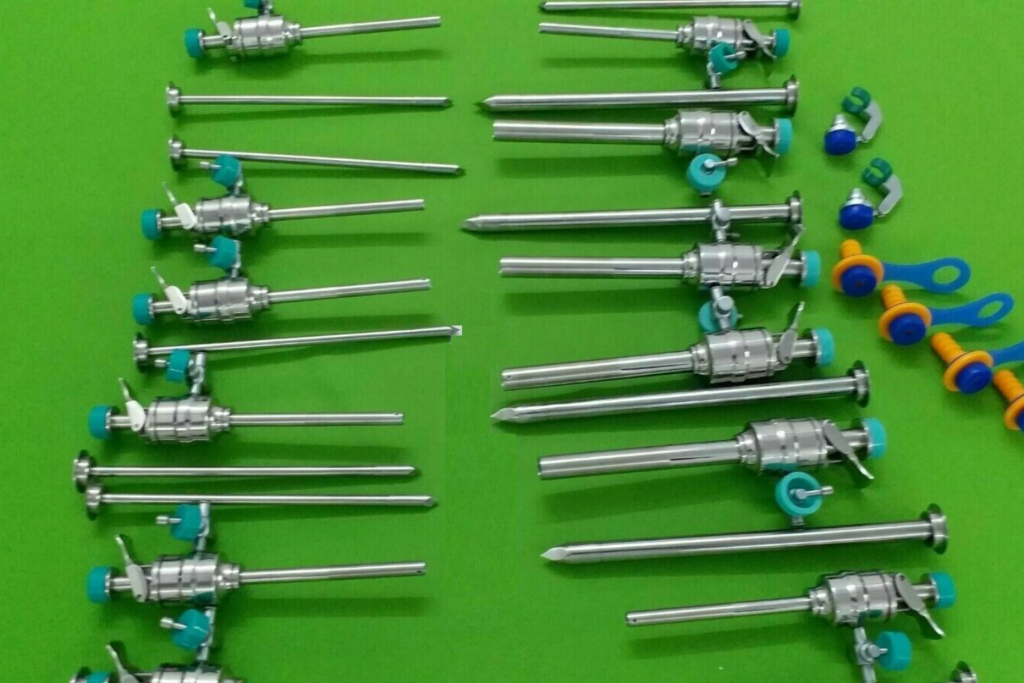
A trocar is essentially a surgical access device that allows instruments to pass through the abdominal wall while maintaining a sealed environment. It typically includes a sharp or blunt tip for insertion and a protective sleeve that remains in place during the procedure.
The importance of trocars goes beyond simple access. They help maintain internal pressure within the abdomen, which is necessary for creating a clear working space during laparoscopic surgery.
Without reliable trocars, surgeons would struggle to maintain the stability and visibility required for minimally invasive procedures.
They may look simple, but their role is fundamental.
Keeping Surgical Access Stable
Once entry points are established, another component becomes essential — ensuring that those access channels remain secure and functional throughout the operation.
This is where cannulas come into the picture.
Cannulas are tube-like structures that fit into the openings created by trocars. They provide a stable pathway for surgical instruments to enter and exit the body smoothly.
What makes cannulas particularly important is their ability to reduce friction and protect surrounding tissues. They allow surgeons to switch instruments quickly without disrupting the surgical environment.
Some modern cannulas also include advanced sealing mechanisms that help maintain consistent internal pressure, further improving surgical efficiency.
In many ways, they serve as the gateway between the external world and the surgical site — a small but essential link in the entire process.
The Human Skill Behind Advanced Tools
While laparoscopic technology is impressive, it’s important to remember that tools alone don’t perform surgery.
The true magic lies in the skill and adaptability of the surgeons who use them.
Operating with laparoscopic instruments requires a different set of abilities compared to traditional open surgery. Surgeons must rely heavily on hand-eye coordination, interpreting two-dimensional images while controlling instruments from a distance.
There’s a learning curve involved — one that demands patience, practice, and precise technique.
Over time, surgeons develop a deep familiarity with how these tools respond. They learn how much pressure to apply, how to maneuver within tight spaces, and how to maintain steady control throughout procedures.
It’s a partnership between human expertise and technological innovation.
Why Minimally Invasive Tools Continue to Evolve
As medical technology advances, laparoscopic tools continue to improve.
Modern designs focus on enhancing ergonomics, reducing hand fatigue, and increasing instrument durability. New materials allow for lighter tools without compromising strength.
There’s also growing integration with digital systems. Some instruments now incorporate sensors or robotic assistance, enabling even greater precision and control.
These innovations are driven by a simple goal — improving patient outcomes while making surgical procedures safer and more efficient.
The Broader Impact on Patient Care
The rise of minimally invasive surgery has had far-reaching effects on healthcare.
Hospitals benefit from shorter patient stays and faster turnover rates. Healthcare systems experience reduced costs associated with recovery and complications. Most importantly, patients enjoy quicker healing and improved quality of life.
For many individuals, laparoscopic procedures mean less time away from work, family, and daily routines.
It’s one of those rare advancements in medicine that benefits everyone involved.
Looking Toward the Future
The future of laparoscopic surgery is likely to include even greater technological integration.
Robotic-assisted systems are already allowing surgeons to perform complex procedures with enhanced precision. Artificial intelligence may soon assist with real-time decision-making during operations.
At the same time, ongoing research continues to refine instrument design, making tools more adaptable and patient-specific.
These developments promise to push minimally invasive surgery even further.
A Quiet Revolution That Changed Everything
Most patients undergoing laparoscopic surgery focus on their recovery — the relief of minimal pain, the small incisions, the speed of healing.
They may never think about the intricate tools that made those outcomes possible.
Yet behind every successful minimally invasive procedure lies a carefully coordinated system of instruments working together seamlessly.