


A quiet home has its own rhythm—until an appliance decides to break that rhythm at the worst possible moment. Maybe your morning routine stalls because the microwave won’t heat, or the kitchen turns into a mess because the dishwasher stops draining. These are the kinds of problems that feel small at first, then instantly become disruptive. The good news? Most appliance issues have common causes, and when you understand the warning signs, you can decide quickly whether it’s a simple fix, a maintenance issue, or time to call a technician.
Let’s start with the one most households use multiple times a day: Microwave repair. If your microwave runs but doesn’t heat, it’s often related to a faulty magnetron, diode, or capacitor—components that require professional handling due to high voltage. If it won’t power on at all, the issue could be a door switch, blown fuse, or failed control board. A quick tip: make sure the outlet is working and the door is closing properly. Many microwaves won’t start unless the door sensors engage perfectly.
Next up is the dishwasher—an appliance people truly miss only when it’s gone. With Dishwasher Repair, the most common complaints are poor cleaning, water not draining, or leaking. Poor cleaning is often caused by clogged spray arms, a dirty filter, or hard-water buildup. If it’s not draining, a blocked drain hose or faulty pump might be the culprit. Leaks, on the other hand, can come from worn door gaskets, loose clamps, or a cracked inlet valve. Regularly cleaning the filter and checking the spray arms for food particles can prevent a lot of these problems.
Oven troubles can be frustrating, especially when you’re hosting or meal-prepping. Oven repair calls are frequently related to uneven heating, temperature inconsistency, or ignition problems in gas models. For electric ovens, a burned-out heating element is a typical issue. If the oven takes forever to preheat, the temperature sensor might be failing—or the thermostat could be off. A simple test is using an oven thermometer to see if the displayed temperature matches reality. If it’s way off, it’s usually fixable without replacing the entire unit.
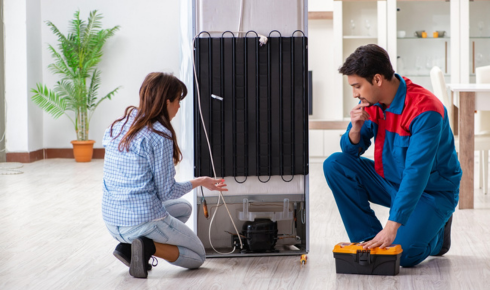
Now, refrigerators are a different story because food safety becomes part of the problem. When your fridge isn’t cooling properly, check basic things first: are the vents blocked, are the door seals tight, and is the temperature set correctly? Common causes include dirty condenser coils, a failing evaporator fan, or a faulty defrost system. Strange noises often point to a fan motor issue, while puddles of water can be related to a clogged defrost drain. Since refrigerators run nonstop, small issues can become big quickly—so early attention is key.
Washing machines are another household essential, and breakdowns can pile up laundry fast. Problems like water not filling, not draining, excessive vibration, or a drum that won’t spin usually have predictable causes. A machine that doesn’t drain might have a clogged pump filter or drain hose. If it shakes violently, uneven loads or worn suspension parts could be to blame. And if it doesn’t spin, the lid switch, belt, or motor coupling might be the issue depending on the model. If you notice burning smells, repeated error codes, or leaking from underneath, it’s best to pause use and get it inspected.
So, when should you repair versus replace? A good rule is to consider age, repair cost, and efficiency. If an appliance is relatively new and the repair is minor, fixing it makes sense. If it’s older and the repair involves major parts (like compressor issues in a fridge or control board failures), replacement might be more cost-effective long term.
If you want fewer surprises, try small habits: clean filters, keep vents unblocked, avoid overloading machines, and schedule preventive checks when something feels “slightly off.” Appliance issues rarely appear out of nowhere—most give signals first. And when you catch those signals early, you save money, time, and a whole lot of stress.