


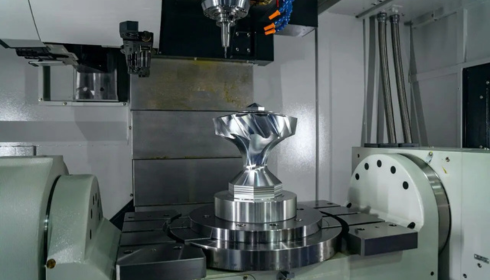
Manufacturing has changed dramatically over the last decade, especially with the rise of advanced automation and precision engineering. One of the biggest developments in this space is 5-axis CNC machining, a process that allows manufacturers to create highly detailed and accurate components with remarkable efficiency. From aerospace and automotive parts to medical devices and custom industrial equipment, this technology has become a key part of modern production.
Unlike traditional machining systems, 5-axis machines move cutting tools across five different axes simultaneously. This gives manufacturers greater flexibility when shaping complex materials and reduces the need for multiple setups. The result is improved precision, faster turnaround times, and better overall product quality.
Understanding How 5-Axis CNC Technology Works
Traditional CNC machines generally operate on three axes: X, Y, and Z. While these systems are effective for many basic applications, they can struggle with intricate geometries or components requiring multiple angles. A 5-axis system adds two rotational axes, allowing the cutting tool or workpiece to move in more advanced directions.
This additional movement means parts can often be completed in a single setup. That may sound like a small detail, but it has a major impact on production quality and efficiency. Fewer setups reduce the chances of alignment errors and help maintain tighter tolerances throughout the manufacturing process.
Industries that demand high precision often rely on CNC machining because even the smallest error can affect product performance. Aerospace turbine blades, surgical tools, and automotive engine components are all examples where advanced machining capabilities are essential.
Greater Precision and Accuracy
One of the biggest reasons companies invest in 5-axis systems is accuracy. Since the machine can approach the material from multiple angles without repositioning the workpiece manually, the finished component tends to be far more precise.
This is especially important for industries working with complicated shapes or detailed engineering specifications. Complex curves, deep cavities, and unusual contours become easier to machine with consistency. Manufacturers also benefit from improved surface finishes, reducing the need for additional polishing or finishing processes afterward.
Precision not only improves the quality of the final product but also reduces material waste. When fewer mistakes happen during production, companies save money on both raw materials and rework.
Faster Production Times
Time is a major factor in manufacturing, particularly for businesses managing large production runs or tight client deadlines. Since 5-axis systems can complete multiple operations in one setup, machining times are often significantly reduced.
Operators no longer need to stop production repeatedly to reposition parts. This streamlined workflow improves productivity and allows manufacturers to produce more components within shorter periods. Faster production also helps businesses respond quickly to changing market demands or urgent customer requirements.
In competitive industries, reducing lead times can provide a significant advantage. Customers increasingly expect rapid turnaround without sacrificing quality, and advanced machining technology helps companies meet those expectations.
Improved Capability for Complex Designs
Modern product design has become increasingly sophisticated. Engineers are constantly developing lighter, stronger, and more efficient components with intricate geometries. Many of these designs would be extremely difficult or nearly impossible to produce using conventional machining methods.
5-axis systems make it possible to create highly detailed parts while maintaining excellent dimensional accuracy. This flexibility opens the door for more innovative engineering solutions across multiple industries.
Medical manufacturers, for example, often require custom implants or surgical instruments with complex contours. Aerospace companies need lightweight parts designed for maximum aerodynamic performance. Advanced machining technology supports these requirements while maintaining consistency across production batches.
Reduced Tool Wear and Better Surface Finish
Another important advantage of 5-axis machining is improved cutting efficiency. Because the tool can maintain the optimal angle against the material, cutting forces are distributed more evenly. This reduces unnecessary stress on the cutting tools and extends their lifespan.
Longer tool life means lower maintenance costs and less downtime for replacements. At the same time, smoother cutting paths help achieve superior surface finishes directly from the machine.
Better surface quality is especially valuable for industries where appearance and precision matter equally. Components often require less secondary finishing work, helping manufacturers save both time and labour costs.
The Future of Advanced Manufacturing
As industries continue demanding greater precision, speed, and flexibility, 5-axis CNC machining will likely become even more important. Manufacturers are constantly looking for ways to improve efficiency while maintaining exceptional quality standards, and advanced CNC systems provide a practical solution.
Automation, digital manufacturing, and smart factory technology are also contributing to the growth of high-performance machining systems. Combined with modern CAD/CAM software, these machines allow businesses to transform complex digital designs into highly accurate physical components.
For companies focused on innovation and long-term competitiveness, investing in advanced machining capabilities is no longer just an option. It is becoming a critical part of staying ahead in modern manufacturing.