

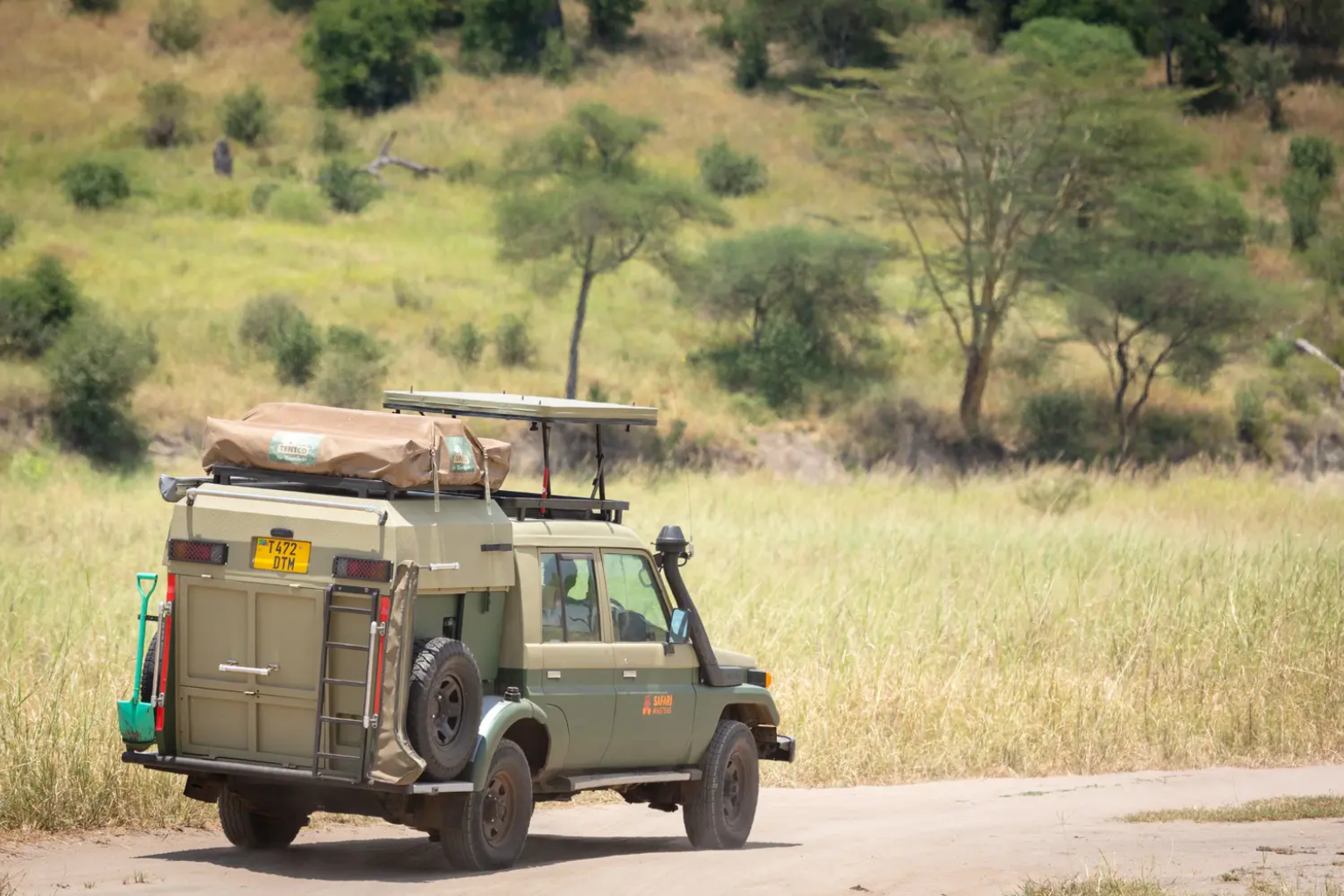

A self-drive safari in Tanzania is absolutely possible—and for the right traveler, it can be one of the most rewarding ways to experience Africa’s wildlife. With vast national parks, dramatic landscapes, and world-famous game viewing, Tanzania offers an unforgettable adventure for independent explorers willing to plan carefully.
This guide covers everything you need to know before setting off on a self-drive safari in Tanzania. for the first timer, hiring a car with a guide would be ideal
Can You Do a Self-Drive Safari in Tanzania?
Yes. Self-driving is allowed in most major national parks and conservation areas, including:
- Serengeti National Park
- Ngorongoro Conservation Area
- Tarangire National Park
- Lake Manyara National Park
- Arusha National Park
- Ruaha National Park
- Nyerere National Park (formerly Selous)
Visitors must pay park entry fees and follow all Tanzania National Parks Authority (TANAPA) regulations.
What Vehicle Do You Need?
A proper 4×4 vehicle is essential. Regular SUVs or 2WD vehicles are not suitable for park roads.
Recommended vehicles:
- Toyota Land Cruiser (most reliable option)
- Land Rover Defender
Your vehicle should include:
- High ground clearance
- Two spare tires
- Recovery gear
- Extra fuel storage
- Offline GPS/maps
Road conditions vary from dusty tracks to muddy terrain during the rainy season. In remote areas like the Serengeti, help can be hours away.
Driving License Requirements
You will need:
- A valid driver’s license from your home country
- An International Driving Permit (recommended)
Park permits are purchased online or at park gates, depending on the park.
Costs of a Self-Drive Safari
While self-drive is often cheaper than a fully guided private safari, it is not a budget activity.
Typical daily costs (approximate):
- Park fees: $50–$80 per person per day
- Vehicle rental: $150–$250 per day
- Camping fees: $30–$60 per person per night
- Lodge accommodation: significantly higher
Ngorongoro Conservation Area charges additional vehicle and crater descent fees.
Pros and Cons of Self-Drive SafarisAdvantages
- Complete flexibility
- Travel at your own pace
- More affordable than private guided safaris
- Strong sense of adventure
Challenges
- No professional wildlife tracking expertise
- Limited signage inside parks
- Little or no mobile signal
- Responsibility for breakdowns
- Remote and rugged conditions
Experienced safari guides are highly skilled at spotting wildlife. Without one, you may miss animals that would otherwise be easily found.
Best Parks for First-Time Self-Drivers
If you are new to African safaris, start with:
Tarangire National Park
Easier navigation and excellent elephant sightings.
Lake Manyara National Park
Compact, manageable, and diverse wildlife.
Serengeti National Park
Incredible wildlife but more remote and challenging.
Is Self-Drive Right for You?
A self-drive safari in Tanzania is ideal for:
- Confident drivers comfortable with rough terrain
- Travelers seeking independence
- Adventure-oriented couples or small groups
- Budget-conscious visitors willing to plan carefully
If you prefer maximum wildlife sightings with minimal stress, a guided safari may be a better choice.
Final Thoughts
A self-drive safari in Tanzania offers freedom, adventure, and unforgettable wildlife encounters. With the right vehicle, preparation, and realistic expectations, it can be one of the most rewarding travel experiences in Africa.
Proper planning is essential—but the payoff is extraordinary.