

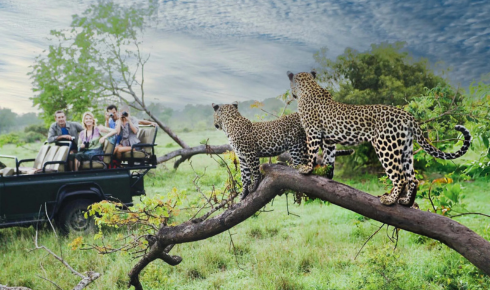

For those seeking a safari experience that captures both wildlife and landscape in perfect harmony, Southern Africa offers some of the world’s most remarkable photographic opportunities.
From sprawling plains to intimate wildlife encounters, the region presents moments that every photographer, whether amateur or seasoned, will treasure. If you are considering a photographic safari in Botswana or planning a broader African safari, these destinations are among the finest places to witness and capture the natural world.
Each region brings its own character and style, providing a diverse palette for storytelling through photography. The interplay of light, terrain, and wildlife ensures that no two days are ever the same, allowing travellers to experience the essence of Southern Africa in both sweeping vistas and delicate details.
Singita Game Reserve, South Africa
Nestled within the Sabi Sand Private Game Reserve and bordering Kruger National Park, Singita is renowned for its high concentrations of big game and frequent leopard sightings.
The mixture of open plains, riverine forests, and granite outcrops provides varied photographic opportunities. Early mornings often bring soft light spilling over the bush, ideal for wide-angle shots, while evenings offer warm tones perfect for wildlife portraits.
The reserve’s infrastructure allows photographers to explore at leisure, experimenting with lenses and compositions without feeling rushed. Subtle shifts in lighting and movement ensure each safari delivers a unique visual story.
Okavango Delta, Botswana
The Okavango Delta offers a distinctly aquatic experience, unlike anywhere else in Southern Africa. Meandering channels thread through grassy plains and islands, offering low-angle views of elephants, hippos, and birds from a traditional mokoro canoe.
Seasonal variations transform the landscape, from shimmering floodwaters to golden dry-season plains. Wildlife photography here is complemented by dramatic landscape shots, especially at sunrise and sunset when the water mirrors the sky.
The combination of abundant wildlife, water, and expansive horizons provides a versatile canvas for storytelling through images.
Sabi Sands Private Game Reserve, South Africa
Sabi Sands is prized for its exclusivity and variety of terrain. The area’s private concessions create contrasting backdrops, from dense bush to open plains, allowing photographers to capture leopards, lions, and elephants in their natural habitats.
Morning light filtering through acacia trees and the long shadows of late afternoon provide perfect conditions for both close-up and landscape photography. Small-group excursions give flexibility for positioning and timing, ensuring that every frame conveys the essence of the African bush.
Mashatu, Botswana
Located in the southeastern Tuli Block, Mashatu is a less-travelled corner of Botswana that offers a distinctive ecological and photographic experience. Its arid, open landscapes may appear stark at first glance, yet the scattered trees and subtle textures provide compelling compositions.
Unexpected moments abound: a raptor perched on a branch, a herd moving along a sandy riverbed, or nocturnal creatures revealed on night drives.
Photographers appreciate the intimacy and unpredictability of encounters, where patience and observation yield fleeting but unforgettable moments.
Etosha National Park, Namibia
Etosha is defined by its vast salt pans, sparse vegetation, and concentrated wildlife, making it a photographer’s playground. During the dry season, animals congregate around waterholes, providing clear shots of elephants, lions, and rhinos against open horizons. Flamingos in shallow pans, or an occasional dust storm, add atmospheric depth to landscape imagery.
Etosha’s accessibility and infrastructure allow careful planning around optimal light and animal movements, ensuring a harmonious balance of wildlife and scenery in every frame.
Kruger National Park, South Africa
Kruger’s vast scale and rich biodiversity make it one of Southern Africa’s most famous photographic destinations. Habitats range from open savannah to riverine forest, with the chance to capture the Big Five and a plethora of other species.
Strategic game drives at dawn and dusk maximise dynamic lighting, while abundant birdlife provides vivid contrast to larger mammals. The diversity of terrain and wildlife ensures that no two days of photography are ever identical.
Tips for a Photographic Safari
Timing: Early mornings and late afternoons provide the best light for both wildlife and landscapes.
Equipment: Bring a range of lenses from wide-angle to telephoto. Tripods are useful for low-light or scenic shots.
Composition: Use foreground and background elements such as trees, rocks, or water reflections to create depth.
Patience: Remaining still and observant often yields the most rewarding captures.
Respect: Maintain a safe distance from animals and adhere to park guidelines to protect both wildlife and yourself.
Conclusion
The photographic safari destinations of Southern Africa combine vast natural beauty, extraordinary wildlife, and accessible terrain, offering endless possibilities for visual storytelling. From the waterways of the Okavango Delta to the salt pans of Etosha, each location provides a unique backdrop.
Every safari is a journey not only through Africa’s wilderness but also through light, texture, and life, leaving photographers with images that reflect the spirit of the bush.
Whether planning a photographic safari in Botswana or an extensive African safari, these regions ensure every frame tells a story — one that is alive with movement, stillness, and the unbridled beauty of Southern Africa.