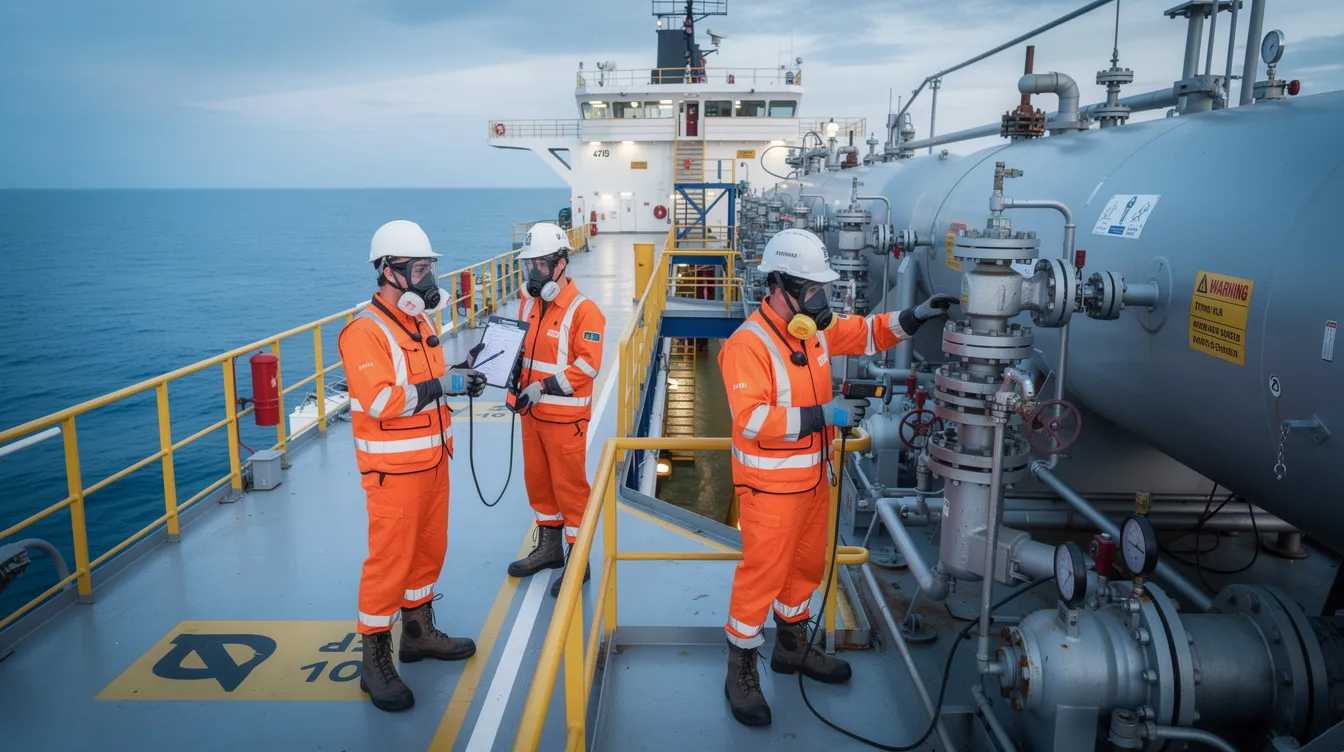
Enclosed spaces remain one of the deadliest hazards at sea. Cargo holds, ballast tanks, void spaces, chain lockers and pump rooms can hold atmospheres that are oxygen-deficient, oxygen-enriched, flammable or toxic, often with no visible warning. A portable gas detector is frequently the only thing standing between a crew member and a fatal atmosphere, which is why it must be the right instrument, working correctly, every time.
This checklist covers the gas detection practices vessel operators should have in place, from choosing detectors to bump testing, calibration, record keeping and inspection readiness.
What Changed: The 2025 IMO Revised Recommendations
On 27 June 2025, the IMO adopted Resolution MSC.581(110), the Revised Recommendations for Entering Enclosed Spaces Aboard Ships. It supersedes the earlier Resolution A.1050(27) and reflects the continuing loss of life in enclosed space incidents.
Key points for gas detection include:
- Each ship should have a ship-specific Enclosed Space Register listing every enclosed space, its connected and adjacent spaces, hazards, and how the atmosphere may change with the cargo or contents.
- Persons entering enclosed spaces should be provided with calibrated and tested personal gas detection instruments.
- Hazards from carbon dioxide (CO₂) are now explicitly addressed. Classification society guidance advises that span gas for calibration and routine bump testing should also cover CO₂ meters where they are used.
- Companies should provide comprehensive training in the maintenance, calibration and use of atmosphere testing equipment.
The minimum gases portable detectors must measure remain set by SOLAS regulation XI-1/7, which requires ships to carry appropriate portable atmosphere testing instruments capable of measuring oxygen, flammable gases or vapours, hydrogen sulphide and carbon monoxide. Additional sensors such as CO₂ should be selected based on risk assessment and the cargoes carried.
Checklist 1: Detector Types and Selection
☐ Portable multi-gas detectors on board meet the SOLAS XI-1/7 minimum (O₂, flammable gases, H₂S and CO).
☐ The need for additional sensors, such as CO₂, has been assessed against the Enclosed Space Register and the cargoes carried.
☐ Personal detectors are available for everyone entering an enclosed space, not just one shared unit.
☐ Fixed gas detection systems (for example in pump rooms or cargo areas) are included in the maintenance plan.
☐ Spare sensors, batteries and sampling equipment (pumps, hoses, probes) are on board and in date.
Checklist 2: Bump Testing Before Entry
A bump test is a quick functional check: the detector is briefly exposed to a known gas to confirm that sensors respond and alarms activate. It does not adjust the instrument.
☐ Detectors are bump tested before each day’s use or before entry, in line with the manufacturer’s instructions and the company’s safety management system.
☐ Bump test gas is suitable for every sensor fitted, including CO₂ where applicable.
☐ Test gas cylinders are within their expiry date.
☐ Any detector that fails a bump test is removed from service and tagged until it is recalibrated or repaired.
☐ Results are logged with the date, instrument ID and the person performing the test.
Checklist 3: Calibration Intervals
Calibration goes further than a bump test. Certified reference gas of known concentration is applied, the detector’s readings are compared and adjusted, and the results are documented. Sensors drift with age, exposure to high gas concentrations, temperature extremes and contamination, so regular calibration is the only reliable way to confirm accuracy.
☐ Each detector has a defined calibration interval based on the manufacturer’s recommendation, the company’s procedures and the conditions on board.
☐ Calibration is brought forward after a failed bump test, a sensor replacement, a drop, or exposure to gas concentrations beyond the sensor’s range.
☐ Calibration is carried out by a competent provider using traceable, in-date reference gas matched to each sensor.
☐ Calibration certificates record pre- and post-calibration readings and the reference gas details.
For vessels calling at Singapore, accreditedgas detector calibration can be arranged in a laboratory or on board. Providers offeringmarine on-board calibration allow instruments to be checked during port stays without disrupting operations, and accreditedSINGLAS calibration certificates provide traceable results recognised internationally.
Checklist 4: Record Keeping
☐ A gas detection log lists every detector on board with ID, sensor types, last calibration date and next due date.
☐ Calibration certificates are kept on board and accessible for inspection.
☐ Bump test records are complete and up to date.
☐ Failed tests, sensor replacements and repairs are documented with follow-up actions.
☐ The Enclosed Space Register and gas detection records are cross-referenced, so the right instruments are linked to the right spaces.
Checklist 5: Preparing for Inspections
Gas detectors are a common focus during flag state, port state control and class inspections, as well as charterer and terminal vetting. Inspectors may check whether instruments are in calibration, whether bump test records exist, and whether crew can demonstrate correct use.
☐ No detector on board is past its calibration due date.
☐ Crew can demonstrate a bump test and explain alarm set points.
☐ Enclosed space entry and rescue drill records show detectors in use.
☐ The safety management system reflects the revised IMO recommendations, including the Enclosed Space Register.
Conclusion
Gas detectors only protect crews when they are the right type, tested before use and calibrated on schedule. With the IMO’s revised enclosed space recommendations now in place, vessel operators have a clear opportunity to review detector selection, testing routines and records. Regular calibration of gas detectors by a competent, accredited provider, backed by disciplined bump testing and record keeping, keeps both crews and inspections on the safe side.