

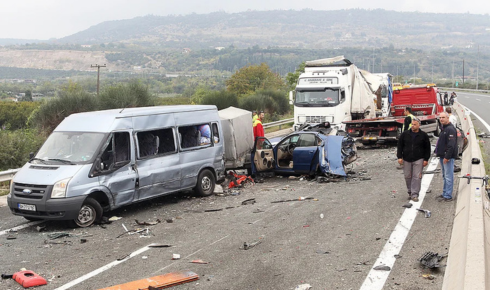

Commercial trucks move a large portion of goods across highways every day. While these vehicles are essential to the supply chain, their massive size and weight can make accidents far more dangerous than typical car crashes. Understanding the most common types of truck accidents can help drivers become more aware of potential risks and the circumstances that often lead to serious roadway incidents.
Jackknife Accidents
One of the most well-known types of truck accidents is the jackknife accident. This occurs when the truck’s trailer swings out to form an angle with the cab, resembling the shape of a folding knife.
Jackknife accidents often happen when:
- A driver brakes suddenly on slippery roads
- The trailer loses traction
- Cargo weight is unevenly distributed
Once a trailer begins to swing sideways, it can block multiple lanes of traffic and cause multi-vehicle collisions.
Rollover Accidents
Truck rollovers are another dangerous type of crash. Due to their height and weight distribution, large trucks can become unstable if they turn too sharply or travel too fast around curves.
Rollovers are commonly caused by:
- High speeds while turning
- Sudden steering corrections
- Improperly balanced cargo
- Strong crosswinds affecting tall trailers
When a truck rolls over, it can block entire roadways and create hazardous conditions for nearby drivers.
Rear-End Collisions
Rear-end collisions involving trucks can be particularly severe because trucks require much longer stopping distances than passenger vehicles. If traffic suddenly slows or stops, a truck driver may not have enough time or space to bring the vehicle to a complete stop.
These accidents frequently occur due to:
- Distracted driving
- Driver fatigue
- Following vehicles too closely
- Poor visibility or bad weather conditions
The impact from a large truck striking a smaller vehicle from behind can cause significant damage and serious injuries.
Blind Spot Accidents
Commercial trucks have large blind spots on all sides of the vehicle, especially along the right side and directly behind the trailer. If a passenger vehicle remains in these areas for too long, the truck driver may not see it when changing lanes.
Blind spot accidents often happen during:
- Highway lane changes
- Merging traffic
- Urban driving with heavy congestion
Drivers can reduce risk by avoiding long periods in these blind spots and ensuring they remain visible in the truck’s mirrors.
Underride Accidents
Underride accidents occur when a smaller vehicle slides beneath a truck’s trailer during a collision. These incidents are particularly dangerous because the smaller vehicle can become trapped underneath the trailer.
They typically occur when:
- A vehicle rear-ends a truck
- A truck stops suddenly
- Visibility is reduced during nighttime or poor weather
Safety guards are designed to reduce the likelihood of these accidents, but they can still occur under certain conditions.
The Importance of Investigating Truck Accidents
Truck accidents often involve complex investigations because many factors can contribute to the crash. These may include driver behavior, vehicle maintenance, cargo loading procedures, and road conditions.
In some cases, multiple parties may be involved, such as trucking companies, cargo loaders, or vehicle maintenance providers. Understanding these factors can help determine what caused the accident and who may be responsible.
For individuals trying to better understand their legal options after a serious collision, speaking with a truck accident lawyer can provide guidance on how these cases are typically handled.
How Drivers Can Reduce the Risk of Truck Accidents
Although drivers cannot control every situation on the road, there are steps that can reduce the chances of accidents involving large trucks.
Drivers should try to:
- Maintain a safe following distance
- Avoid lingering in truck blind spots
- Pass trucks quickly and safely when necessary
- Stay alert during highway driving
- Be cautious during poor weather conditions
Being aware of the limitations that large trucks face on the road can help drivers make safer decisions.
Conclusion
Truck accidents can occur in several different ways, from jackknife incidents and rollovers to blind spot collisions and rear-end crashes. Each type of accident presents unique risks due to the size and weight of commercial vehicles.
By understanding how these accidents happen and recognizing the common warning signs, drivers can become more cautious when sharing the road with trucks and reduce the likelihood of serious collisions.