A festive hairstyle is more likely to stay in place when you prepare and secure it before the event. Build grip at the roots, anchor the shape with well-placed pins, use heat with restraint, and keep a small repair kit nearby. Whether you choose a braid, ponytail, bun or half-up style, aim for a secure look that can handle movement without feeling tight or overworked.
Plan the hairstyle around your neckline, accessories, natural hair volume and how much you expect to move. A low braid with an ornate parandi needs different pin placement from a lifted ponytail, while a soft bun needs a secure base to hold its shape.
What makes a hairstyle last through a festive night?
Longevity comes from preparation, placement and controlled hold, not from applying every styling product you own. Clean roots, a dry hair shaft, intentional sectioning and secure anchor points give a hairstyle a better chance of staying composed through dancing, heat and photographs.
- Root grip prevents the style from collapsing flat at the crown.
- Micro-sectioning spreads the weight of thick hair and reduces slipping.
- Two or three concealed anchor points hold a braid, bun or ponytail in position.
- Lightly smooth the hairline to keep it neat while allowing the style to feel soft and comfortable.
- A compact touch-up pouch lets you repair one loose area instead of rebuilding the whole look.
How should you prep hair before styling?
Begin only once every layer is dry enough to separate cleanly. If you wash it on the event day, avoid leaving a heavy conditioning film at the roots. A little natural grip makes pinning and braiding easier; an overloaded, freshly softened surface can make the hairstyle slide apart.
Build a workable styling base
Detangle from the ends upward, then establish your parting before you switch on a tool. Use a clean hair brush to smooth the surface without repeatedly dragging through the same section. For an intricate braid or a sculpted ponytail, divide the hair into manageable panels rather than improvising once the pins are out.
Use thermal tools with a lighter hand
Apply a heat protection serum before blow-drying, tonging or straightening, following the formula directions. It is a protective styling step, not a licence for maximum temperature. The American Academy of Dermatology Association advises using the lowest heat setting, while a 2011 study found that dryer-related surface damage increased with temperature and was lower when the dryer stayed in motion at a distance. (1, 2)
Which festive hairstyle should you choose?
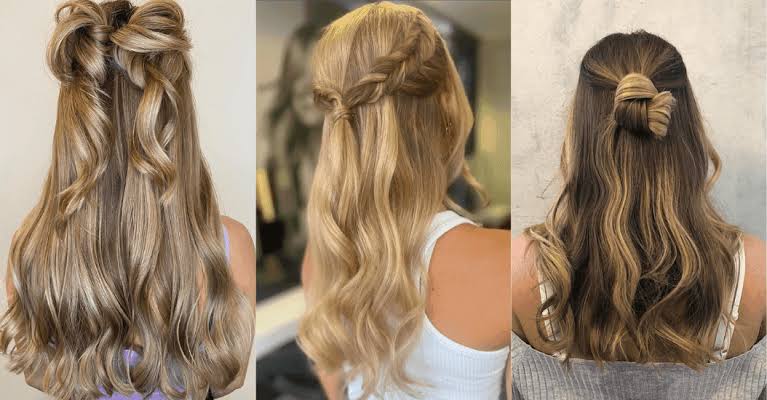
Choose a design that matches the amount of movement you expect and the detail around your neckline. A style that photographs beautifully while standing still may not be the right choice for fast dance rounds. The comparison below helps you balance visual impact with practical hold.
Style direction Best for Hold strategy Watch-out
| Braided ponytail | High-energy festive plans | Secure the ponytail base, then pin the braid at two points | Avoid a weighty extension if you are prone to headaches |
| Low textured bun | Sarees and ornate dupattas | Form an internal bun base and cross-pin through it | Keep the nape comfortable |
| Half-up waves | Shorter events and softer outfits | Anchor the crown section before curling the lengths | Humidity can loosen the wave pattern |
| French braid ponytail | Long hair and festive outfits with back detailing | Begin with a firm French braid at the crown, then bind the remaining length into a ponytail | Keep the braid tension even so it does not shift at the crown |
| Woven braided bun | Evening events and statement jewellery | Build two braids first, wrap them around a bun base and pin each layer | Too many pins in one spot can feel uncomfortable |
| Bubble ponytail | Contemporary lehengas and playful accessories | Create evenly spaced elastics, then loosen each section slightly for volume | Keep each bubble compact or the shape may drop |
| Twisted half-up style | Day rituals and lighter festive dressing | Twist small side sections back and fasten them beneath the crown | Use concealed pins that match your hair colour |
| Deep side-part waves | Glamorous evening styling | Set the part first, clip the front section while styling, then brush the waves into one direction | A loose front section can fall across the face |
| Claw-clip French twist | Quick transitions from day to night | Twist the hair upward, tuck the ends and use a large, secure clip | Choose a clip that can hold your hair density |
| Embellished low bun | Traditional sarees, hair jewellery and gajra | Create the bun first, then place pins, pearls or flowers around its outer edge | Add accessories after the structure is secure |
| Baby braids with open hair | Relaxed festive looks and shorter hair lengths | Braid two fine face-framing sections and secure them with clear elastics | Keep the remaining hair lightly styled so the braids do not look disconnected |
| Bow-accented low ponytail | Feminine outfits and softer makeup looks | Fix the ponytail first, then attach the bow over the elastic | Use a lightweight bow so it does not slide down |
How do you create a hairstyle with stronger hold?
Apply styling products only where you need grip, hold or definition. Give the roots enough support and the lengths a polished finish without making the hair stiff. Work in light layers and reassess after each stage.
- Map the silhouette. Sketch the final placement first; product should follow the shape rather than dictate it. Identify the crown, nape and side sections that need support.
- Add root grip. Apply a small amount of styling product where you need lift or direction, then work it through with your fingers.
- Secure the foundation. Build the first elastic or pin placement close to the scalp. A loose base cannot be corrected by adding more pins over the top.
- Refine the finish. Use hair wax sparingly around the hairline or through short layers when you need definition. Keep it away from the full length of fine hair, where excess product can make the style look dense or separated.
Choose pins for the job, not at random
Use bobby pins for smaller flyaway sections and a larger U-pin or bun pin for the core of a chignon. Insert pins in opposing directions through the anchor rather than stacking them in one area. If a pin is visible, remove and reposition it; hiding the hardware is part of the finish.
What should you keep in your festive hair touch-up kit?
A practical kit should solve the likely problems: loosened pins, a softening hairline, frizz around the crown or a decorative accessory that shifts. Carrying too many products increases the chance of making the style greasy or weighed down.
- A small pack of bobby pins in your hair colour
- One spare elastic
- A compact comb or mini brush
- A few safety pins for a parandi, gajra or accessory
- Cotton buds for tidying product around the hairline
- A small amount of the product used to define the finish
Common mistakes that make festive hairstyles fall flat
Most hairstyle failures begin before the dancing does. Avoid building a fragile shape on wet hair, over-brushing after you have created texture, or adding product after the style has already started to separate.
- Heat-styling damp hair with a hot tool
- Making a bun or ponytail so tight that it becomes uncomfortable
- Using a new product for the first time on the event day
- Adding several rich products at the root in the name of hold
- Skipping a mirror check from the side and back before leaving
- Trying to fix every loose hair instead of keeping the overall silhouette intact
Tight styles and repeated high-heat exposure can place stress on hair and scalp. If a hairstyle becomes painful, loosen it rather than trying to power through the evening. (2, 3)
FAQs1.Should I wash my hair on the day of a festive event?
You can, but use a routine you already know works for your hair. Leave enough drying time before styling and avoid a heavy root treatment if you need a high-grip braid or bun.
2. Can I style my hair without heat?
Yes. A braided ponytail, textured bun or accessorised plait can hold well without thermal tools. Focus on sectioning, elastic placement and pins rather than trying to recreate a heat-set wave.
3. How can I stop a ponytail from drooping?
Start with a secure base close to the scalp and reduce the weight of the ponytail. For thick hair, split the lengths into sections before smoothing them into the final ponytail.
4.Does hair wax work for flyaways?
It can help shape a few short hairs at the hairline or define a polished parting. Use the smallest amount first, then add only if the finish still needs it.
5.What should I do if my hairstyle starts feeling too tight?
Remove or loosen the pin or elastic causing the pull. A style that keeps pulling at the scalp will distract from the night, so ease it off straight away.
Final five-minute pre-dance check
Before you step out, assess the hairstyle as a whole rather than chasing every loose strand. This short check keeps the structure comfortable and makes the finish look intentional in movement.
- Turn your head left and right to check for any pin that catches or pulls.
- Check the crown, nape and both sides in a mirror or phone camera.
- Make sure the dupatta, gajra or accessory is not pulling against the anchoring point.
- Keep the hairline softly defined, not flattened with product.
- Put spare pins and one elastic into your potli before leaving.
Key takeaways
A lasting festive hairstyle depends on smart construction, not an excessive amount of product. Build a stable base, use measured heat, place pins with intention and choose a shape that suits your movement.
- Prepare dry hair and establish the parting before styling.
- Use lightweight product placement for grip, definition and controlled flyaways.
- Select a style whose structure works with your clothing, hair adornments and the pace of the night.
- Carry a small repair kit so you can correct a single point instead of starting over.