


Kava has a long and meaningful history across the Pacific, but in Hawaii, it holds a uniquely spiritual and cultural role. Known locally as ʻAwa, kava was never just a drink—it was a sacred plant tied to ritual, status, and connection to the divine.
While kava today is often enjoyed for relaxation and socializing, its roots in Hawaiian culture go much deeper. Understanding that history gives a richer perspective on why kava continues to resonate with people today.
The Arrival of ʻAwa in Hawaii
Kava originates from the South Pacific and is made from the root of the Piper methysticum plant. It is widely believed that early Polynesian voyagers brought ʻawa to Hawaii as part of their essential “canoe plants”—a collection of crops and botanicals transported across the ocean to sustain life in new lands.
These voyagers, skilled in navigation and survival, didn’t just bring food. They brought culture.
ʻAwa was one of the most important plants they carried, not because of its nutritional value, but because of its ceremonial and spiritual significance. Once established in Hawaii, it became deeply woven into the traditions of Native Hawaiian society.
ʻAwa as a Sacred Plant
In ancient Hawaii, ʻawa was considered a sacred offering and was closely tied to religious and ceremonial practices. It was commonly used in rituals dedicated to the gods, particularly in ceremonies seeking guidance, healing, or protection.
Priests, known as Kahuna, often prepared and administered ʻawa during these rituals. The preparation itself was treated with great care and respect, reflecting the belief that ʻawa served as a bridge between humans and the spiritual realm.
In many cases, ʻawa was offered to deities as a form of communication—an act meant to invite presence, favor, or insight. It was not consumed casually, and access to it was often restricted based on social status and context.
Preparation and Traditional Use
The traditional preparation of ʻawa in Hawaii was a deliberate and ceremonial process. The roots of the plant were harvested, cleaned, and then mashed or chewed before being mixed with water.
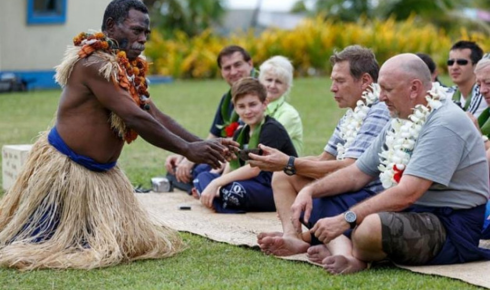
This mixture was strained and served in a communal setting, often in a carved wooden bowl. The act of drinking ʻawa was typically done in a group, reinforcing social bonds and shared purpose.
Unlike modern kava consumption, which is often focused on relaxation or mood enhancement, traditional ʻawa drinking was about intention. Whether the purpose was spiritual guidance, conflict resolution, or healing, the experience was rooted in meaning.
Social Structure and ʻAwa
ʻAwa also played a role in reinforcing the social hierarchy of ancient Hawaiian society. Chiefs, known as Aliʻi, frequently used ʻawa in ceremonies that emphasized their authority and connection to the gods.
In some cases, the use of ʻawa was restricted to the upper classes or to specific ceremonial contexts. This exclusivity further elevated its importance and reinforced its association with power and sacred knowledge.
At the same time, ʻawa was not entirely inaccessible to common people. It was also used in community settings, particularly during gatherings that required unity, reflection, or decision-making.
Decline After Western Contact
The arrival of Western explorers and missionaries in the late 18th and early 19th centuries marked a turning point for ʻawa in Hawaii.
As Christianity spread across the islands, many traditional practices—including the ceremonial use of ʻawa—were discouraged or suppressed. Missionaries often viewed these rituals as incompatible with their religious beliefs, leading to a gradual decline in ʻawa’s cultural prominence.
At the same time, Western influences introduced alcohol as a more common social beverage. Over time, this shift contributed to a reduced emphasis on ʻawa in daily life.
By the late 19th century, while ʻawa was still known and used in certain contexts, it no longer held the same central role it once did in Hawaiian society.
The Modern Revival of Kava
In recent decades, there has been a renewed interest in kava across Hawaii and beyond. This revival is driven by both cultural reconnection and a broader shift toward natural wellness alternatives.
Many Native Hawaiians and cultural practitioners have worked to preserve and restore traditional knowledge surrounding ʻawa. This includes not only how it is prepared, but also the respect and intention that accompany its use.
At the same time, kava has gained popularity globally as a calming, non-alcoholic alternative for relaxation and social connection. This modern use differs from its ancient role, but still reflects some of the same core qualities—community, mindfulness, and balance.
ʻAwa in Hawaii Today
Today, ʻawa exists in both traditional and modern contexts.
In cultural settings, it continues to be used in ceremonies that honor Hawaiian heritage and spirituality. These practices emphasize respect for the plant and its history, ensuring that its original significance is not lost.
In more casual settings, kava is enjoyed for its relaxing effects, often in social environments that mirror the communal aspects of traditional use. While the context may be different, the underlying appeal remains similar—bringing people together in a calm and connected way.
Websites like Realkava help bridge this gap by educating modern consumers while still honoring the cultural roots of kava.
Why the History Still Matters
Understanding the history of ʻawa in Hawaii isn’t just about looking back—it’s about using that knowledge to guide how kava is approached today.
Kava is not just another beverage. It carries centuries of meaning, tradition, and cultural identity. When that history is respected, the experience becomes more than just relaxation—it becomes something more intentional and grounded.
As kava continues to grow in popularity, especially in the United States, there is an opportunity to balance modern use with traditional respect. That balance is what keeps ʻawa from becoming just a trend—and instead allows it to remain something meaningful.
Final Thoughts
The story of kava in Hawaii is one of transformation.
From a sacred ceremonial plant used by priests and chiefs, to a declining tradition under Western influence, to a modern revival embraced by both cultural practitioners and wellness seekers—ʻawa has endured.
Its journey reflects the resilience of Hawaiian culture and the timeless human desire for connection, reflection, and balance.
Whether you’re exploring kava for the first time or deepening your understanding, recognizing its history in Hawaii adds depth to the experience—and a reminder that some traditions are worth preserving.