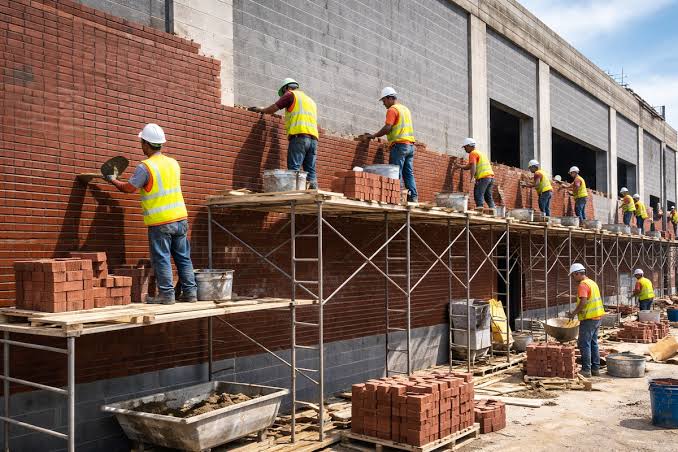
Commercial masonry can appear straightforward on a set of finished plans: walls are laid out, materials are specified, and dimensions are established. On an active construction site, however, masonry interacts with structural systems, utilities, openings, finishes, equipment, and numerous other trades.
That is why successful masonry work often begins well before the first block or brick is installed. Early planning can help general contractors, developers, and project managers identify potential conflicts, organize materials, coordinate crews, and keep construction moving efficiently.
Masonry Is Connected to the Rest of the Building
One of the biggest mistakes in commercial construction is treating individual trades as though they operate independently. Masonry is a good example of why this approach can create problems.
A masonry wall may need to accommodate structural steel, electrical conduits, plumbing penetrations, mechanical equipment, doors, windows, drainage components, and architectural finishes. Each element has its own dimensions and installation requirements.
If these details are not coordinated beforehand, relatively small discrepancies can create significant field problems.
Consider a commercial building with multiple utility penetrations through CMU walls. Discovering after construction that an opening is missing or incorrectly located can require additional labor and coordination. In some situations, completed work may need to be modified.
Early review gives project teams an opportunity to resolve these issues before crews are working against a deadline.
Preconstruction Planning Creates a Better Starting Point
Good masonry planning starts with understanding the scope.
Project drawings and specifications should be reviewed to determine wall types, dimensions, reinforcement requirements, architectural details, openings, material selections, and connections with other parts of the structure.
The masonry contractor can then evaluate how the work will be sequenced on the jobsite.
Important preconstruction considerations often include:
- Wall locations and dimensions
- Structural and reinforcement requirements
- Door, window, and equipment openings
- Utility penetrations
- Material quantities and delivery schedules
- Access for crews and equipment
- Coordination with adjacent trades
- Inspection requirements
- Architectural patterns and finishes
- Project milestones and sequencing
Not every project will present the same challenges. A warehouse with extensive CMU construction may have different priorities than a retail center featuring decorative brick or stone. Multifamily construction introduces another set of coordination requirements.
The objective is to identify those project-specific requirements early enough to plan around them.
Material Logistics Can Affect the Entire Schedule
Commercial masonry requires more than skilled labor. Large quantities of block, brick, stone, mortar materials, reinforcement, and related supplies may need to reach the site at specific stages.
Poorly timed deliveries can create unnecessary complications.
If materials arrive too early, they may occupy valuable staging areas or interfere with other contractors. If they arrive too late, masonry crews may be unable to maintain production.
This issue becomes increasingly important on sites where space is limited.
Stockton and other growing Central Valley communities can have commercial, multifamily, retail, and industrial projects where several trades are operating simultaneously. For these projects, selecting an experienced commercial masonry contractor in Stockton can support the broader coordination process by bringing masonry-specific planning considerations into discussions about sequencing, materials, and field execution.
Material selection itself can also influence logistics. Standard CMU, architectural block, brick, and natural or manufactured stone have different procurement and handling considerations. Specialty products may require longer lead times, making early decisions especially valuable.
Sequencing Helps Prevent Trade Conflicts
A construction schedule may show when masonry begins and ends, but effective sequencing often requires more detail.
Crews need adequate access to their work areas. Equipment and materials need staging space. Certain structural components may need to be completed before masonry can proceed, while other trades may depend on masonry reaching a particular stage before beginning their own installations.
When these dependencies are overlooked, contractors can end up competing for the same work areas.
Think Beyond the Masonry Crew
For example, imagine that a block wall needs electrical components installed within or adjacent to it. The masonry and electrical teams need to understand when those components will be placed and who is responsible for each step.
Similar coordination may be necessary around plumbing, HVAC systems, structural connections, storefront openings, roofing details, and exterior finishes.
The earlier these dependencies are identified, the easier it becomes to establish a workable sequence.
Quality Control Begins Before Installation
Quality masonry depends on workmanship, but preparation plays an equally important role.
A skilled crew cannot compensate for every planning problem. Incorrect dimensions, conflicting plans, unavailable materials, or unresolved structural details can all interfere with otherwise high-quality installation.
Before major masonry work begins, teams should verify that current plans are available and relevant questions have been addressed.
During construction, quality control should continue through routine checks. Depending on the project, teams may monitor wall alignment, dimensions, reinforcement placement, grout procedures, mortar joints, openings, and architectural details.
Communication matters here as well. When field conditions differ from the drawings, questions should be raised quickly rather than allowing assumptions to become completed construction.
Commercial Masonry Requires Scalable Organization
The organizational demands of masonry become more noticeable as projects grow.
Constructing a small decorative wall is very different from completing masonry across a large commercial development. Larger projects can involve substantial material quantities, multiple crews, equipment, inspections, changing work areas, and dependencies with numerous subcontractors.
This makes project management an important part of masonry performance.
Contractors need to balance productivity with quality. Moving quickly is valuable only when work remains consistent with plans and specifications.
A well-organized operation typically focuses on predictable progress. Crews understand their upcoming work areas, necessary materials are available, questions are resolved promptly, and completed sections allow subsequent trades to continue.
That predictability can be valuable to general contractors responsible for coordinating the entire project.
Different Building Types Create Different Priorities
There is no single planning strategy that fits every commercial masonry project.
Industrial facilities and warehouses may place significant emphasis on structural CMU walls, durability, and efficient installation. Retail developments may combine structural masonry with architectural elements designed to create an attractive customer-facing exterior.
Office projects may emphasize clean transitions between masonry, glass, metal, and other facade materials. Multifamily developments can involve repetitive construction across multiple buildings or floors, making consistent workmanship and scheduling particularly important.
Site masonry creates another category. Retaining walls, screen walls, property walls, trash enclosures, and other exterior features must coordinate with grading, paving, landscaping, utilities, and drainage.
Recognizing these differences allows project teams to plan masonry around the actual building rather than applying a generic construction approach.
Communication Can Reduce Expensive Rework
Construction plans inevitably encounter real-world conditions. Dimensions change, materials are substituted, schedules shift, and unforeseen conflicts emerge.
The goal is not to assume that every issue can be eliminated before construction. Instead, teams should establish a process that allows issues to be identified and resolved efficiently.
Clear communication between the masonry contractor, general contractor, project manager, designers, and related trades helps keep small questions from becoming larger problems.
This is particularly important when changes affect completed or upcoming masonry. Because masonry is durable by design, modifying finished work can be more complicated than correcting an issue before installation.
Conclusion
Commercial masonry is not simply a matter of installing block, brick, or stone according to a drawing. Successful execution depends on understanding how masonry fits into the broader construction process.
Early planning gives teams time to coordinate openings, structural details, materials, equipment, inspections, and other trades. Thoughtful sequencing helps crews remain productive while reducing conflicts on busy jobsites. Ongoing communication allows field questions to be addressed before they result in unnecessary rework.
For developers, general contractors, and project managers, these practices can make masonry a more predictable part of the construction schedule. When planning and field execution support each other, the result is not only better masonry work but also a more organized commercial construction project overall.