Category: Software

  • TikTok Comment SEO: How to Turn Questions Into Content

    TikTok Comment SEO: How to Turn Questions Into Content

    TikTok Comment SEO: How to Turn Questions Into Content

    Creators often look for TikTok content ideas in trend reports, keyword tools, competitor profiles, and viral videos. Yet one of the most useful research sources is already available under their own posts.

    The comment section contains the language, questions, doubts, and objections of real viewers. When used strategically, these comments can become searchable videos that answer genuine audience needs.

    This approach can be called TikTok comment SEO: using audience conversations to discover topics and create content that matches how people search.

    It does not require complicated software or a large following. Even a small number of relevant comments can provide enough material for a focused content series.

    Why Comments Are Valuable for TikTok SEO

    Traditional keyword research usually starts with search volume. Comment research starts with context.

    A keyword tool may show that people search for “TikTok engagement tips.” A comment can reveal a more specific problem:

    1. Why do my videos get views but no likes?
    2. Should I delete a video that performs poorly?
    3. Do hashtags still matter for small accounts?
    4. Why do people visit my profile but not follow?
    5. Can an old TikTok start receiving views again?

    These questions provide three valuable pieces of information:

    1. The problem the viewer wants to solve
    2. The language the viewer naturally uses
    3. The level of knowledge the viewer already has

    That information makes it easier to create a useful video, write a clear hook, and select a relevant search phrase.

    Look Beyond the Number of Comments

    A large comment count does not automatically mean that a video has produced a valuable discussion.

    Some posts receive hundreds of one-word reactions that provide little insight. Another post may receive only ten comments, but several contain specific questions or objections.

    Quality matters more than volume when comments are being used for research.

    Creators should look for comments that:

    1. Ask for an explanation
    2. Request a comparison
    3. Challenge a statement
    4. Describe a personal problem
    5. Ask about price, safety, or suitability
    6. Request a demonstration
    7. Mention a result they could not achieve
    8. Use the same phrase more than once

    Repeated questions deserve particular attention. If several viewers ask the same thing, the original video may have introduced a subject without fully answering it.

    Turn One Comment Into One Searchable Topic

    The easiest workflow begins with a single question.

    Suppose a creator publishes a video about improving TikTok engagement. A viewer asks, “Do likes help a new TikTok account grow?”

    That question can become a new video with a direct title:

    “Do TikTok Likes Help a New Account Grow?”

    The creator can then structure the response around the viewer’s actual intention:

    1. Give a short answer.
    2. Explain what likes can and cannot indicate.
    3. Compare likes with watch time, comments, saves, and shares.
    4. Give the viewer a practical next step.
    5. Invite a relevant follow-up question.

    This is stronger than opening with an unrelated dramatic statement because the subject is immediately clear.

    Handle Questions About Growth Services Carefully

    Questions about paid engagement often appear under marketing content. Creators may ask about promotion, advertising, third-party services, or whether they should buy TikTok likes to give a post more initial visibility.

    These topics can generate interest, but they should be handled responsibly.

    A useful response should distinguish between appearance and performance. A higher visible count may change how a post initially looks, but it does not automatically create viewer retention, relevant comments, sales, or a loyal audience.

    Any promotional method should also be evaluated for:

    1. Audience quality
    2. Delivery method
    3. Account access requirements
    4. Data security
    5. TikTok’s current platform rules
    6. Unusual engagement patterns
    7. Retention after the promotion ends
    8. Connection to a measurable business goal

    The content should help viewers make an informed decision rather than promise a result that cannot be confirmed.

    Use the Viewer’s Language in the Video

    Creators often replace simple audience language with industry terminology.

    A viewer asks, “Why are people leaving my video?” The creator changes the topic to “Optimizing audience retention signals through creative sequencing.”

    The second version may sound professional, but it is less natural and may not match the terms people use when searching.

    Start with the viewer’s wording, then introduce the technical term if it helps explain the answer.

    For example:

    “Why are people leaving your TikTok in the first few seconds? This is usually described as an audience-retention problem.”

    This approach keeps the video accessible while adding useful context.

    The same main phrase can appear naturally in:

    1. The spoken introduction
    2. On-screen text
    3. The caption
    4. A cover title
    5. Relevant hashtags

    Every element should describe the same topic. There is no need to repeat the phrase unnaturally.

    Reply With a Video When the Answer Deserves Visibility

    Some questions can be answered in one written sentence. Others deserve a separate video.

    A video reply may be appropriate when:

    1. The answer requires a demonstration
    2. The same question appears repeatedly
    3. The answer could help a wider audience
    4. The topic has clear search potential
    5. The response needs examples
    6. The subject connects to the creator’s expertise
    7. The question introduces a useful debate

    Displaying the original comment in the reply provides immediate context. It also shows that the creator listens to the audience.

    However, the video should still make sense to someone who has never seen the original post. Restate the question clearly rather than assuming every viewer knows the earlier conversation.

    Build Comment-Based Content Clusters

    One question can lead to a group of related videos.

    Imagine that the original topic is “How to Get More Engagement on TikTok.” Comments might produce the following cluster:

    1. Why do TikTok views stop suddenly?
    2. What is a good TikTok engagement rate?
    3. Are likes or shares more important?
    4. How long should a TikTok video be?
    5. Should creators respond to every comment?
    6. Can captions help a TikTok appear in search?
    7. Why do profile visitors not become followers?

    Each video addresses a different search intention while remaining connected to the same main subject.

    This gives the account greater topical consistency. It also makes content planning easier because every published video can generate questions for the next one.

    Find Useful Comments Outside Your Own Profile

    New accounts may not yet receive enough comments for research. They can still study public conversations in their niche.

    Look at:

    1. Videos from established creators
    2. Posts from competing brands
    3. Product review videos
    4. Educational content with active discussions
    5. Relevant Reddit communities
    6. YouTube comments
    7. Customer reviews
    8. Industry forums

    The goal is not to copy another creator’s answer. It is to identify unresolved questions and produce a clearer, more useful response.

    Pay attention to situations where viewers say:

    1. “Nobody explains this part.”
    2. “But what happens if…”
    3. “Does this also work for…”
    4. “I tried this and…”
    5. “Can you show an example?”
    6. “What is the difference between…”

    These phrases often point directly to content gaps.

    Separate Questions by Search Intent

    Not every comment should become the same type of video. Classifying questions by intent helps determine the correct format.

    Informational Intent

    The viewer wants to understand something.

    Examples:

    1. How does TikTok search work?
    2. What does engagement rate mean?
    3. Why are saves important?

    Best formats include tutorials, definitions, and short explanations.

    Comparison Intent

    The viewer is choosing between alternatives.

    Examples:

    1. TikTok SEO or hashtags?
    2. Short videos or long videos?
    3. Organic content or paid promotion?

    Use comparisons, advantages and disadvantages, or decision guides.

    Transactional Intent

    The viewer is considering an action or purchase.

    Examples:

    1. Which TikTok editing tool should I use?
    2. Is this analytics platform worth paying for?
    3. Which microphone is best for beginner creators?

    Demonstrations, reviews, and buyer guides fit this intent.

    Troubleshooting Intent

    The viewer has a specific problem.

    Examples:

    1. Why is my TikTok video under review?
    2. Why did my reach fall?
    3. Why is my link not visible?

    Use diagnostic checklists and step-by-step solutions. Avoid guaranteeing a result when the cause cannot be confirmed without examining the account.

    Create Hooks That Promise a Clear Answer

    A comment already contains a potential hook. The creator’s job is to make it concise.

    Weak hook:

    “You will not believe what most creators get wrong.”

    Clear hook:

    “If your TikTok gets views but almost no comments, check these three things.”

    Other practical templates include:

    1. “Here is why your TikTok…”
    2. “The difference between X and Y is…”
    3. “Before you try X, check…”
    4. “Three reasons your video…”
    5. “Yes, X can happen, but…”
    6. “This TikTok advice does not apply when…”

    The hook should set an accurate expectation. If the introduction promises three reasons, the video should provide three clear reasons.

    Track Which Questions Produce Results

    Comment-based content should still be measured.

    Create a simple spreadsheet containing:

    1. Original question
    2. Source video
    3. Main keyword
    4. Publication date
    5. Video format
    6. Views
    7. Average watch time
    8. Completion rate
    9. Likes
    10. Comments
    11. Saves
    12. Shares
    13. Profile visits
    14. Conversions, if relevant

    After several weeks, patterns may emerge. Troubleshooting videos may receive more search traffic, while opinion videos generate more comments. Comparisons may produce fewer views but more website visits.

    These differences can help the creator choose topics according to business goals rather than views alone.

    Avoid Turning Every Comment Into Content

    Some comments are too vague, irrelevant, or hostile to support a useful video.

    Skip questions when:

    1. The answer would be pure speculation
    2. The topic is unrelated to the account
    3. The commenter requests private information
    4. The video could unfairly target an individual
    5. The question requires professional advice outside the creator’s expertise
    6. The answer would repeat existing content without adding anything new

    Publishing fewer strong responses is better than filling the profile with repetitive answers.

    A Weekly TikTok Comment SEO Routine

    A simple weekly process can keep the content pipeline active:

    1. Collect relevant comments from recent posts.
    2. Group similar questions together.
    3. Highlight questions that appear more than once.
    4. Check how users phrase the topic in TikTok search.
    5. Choose three questions with clear intent.
    6. Record one direct answer for each question.
    7. Add descriptive on-screen text and captions.
    8. Publish and monitor the new comments.
    9. Add useful follow-up questions to the next content cycle.

    This creates a loop in which audience interaction supports research, research supports content, and new content creates further interaction.

    Final Thoughts

    The comment section is more than an engagement counter. It is a continuously updated record of what the audience understands, questions, and wants to explore next.

    TikTok comment SEO turns those conversations into a practical content system. Instead of guessing what to publish, creators can answer visible demand using the language of their audience.

    The process is straightforward: find a meaningful question, understand its intent, answer it clearly, and use the response to begin the next conversation.
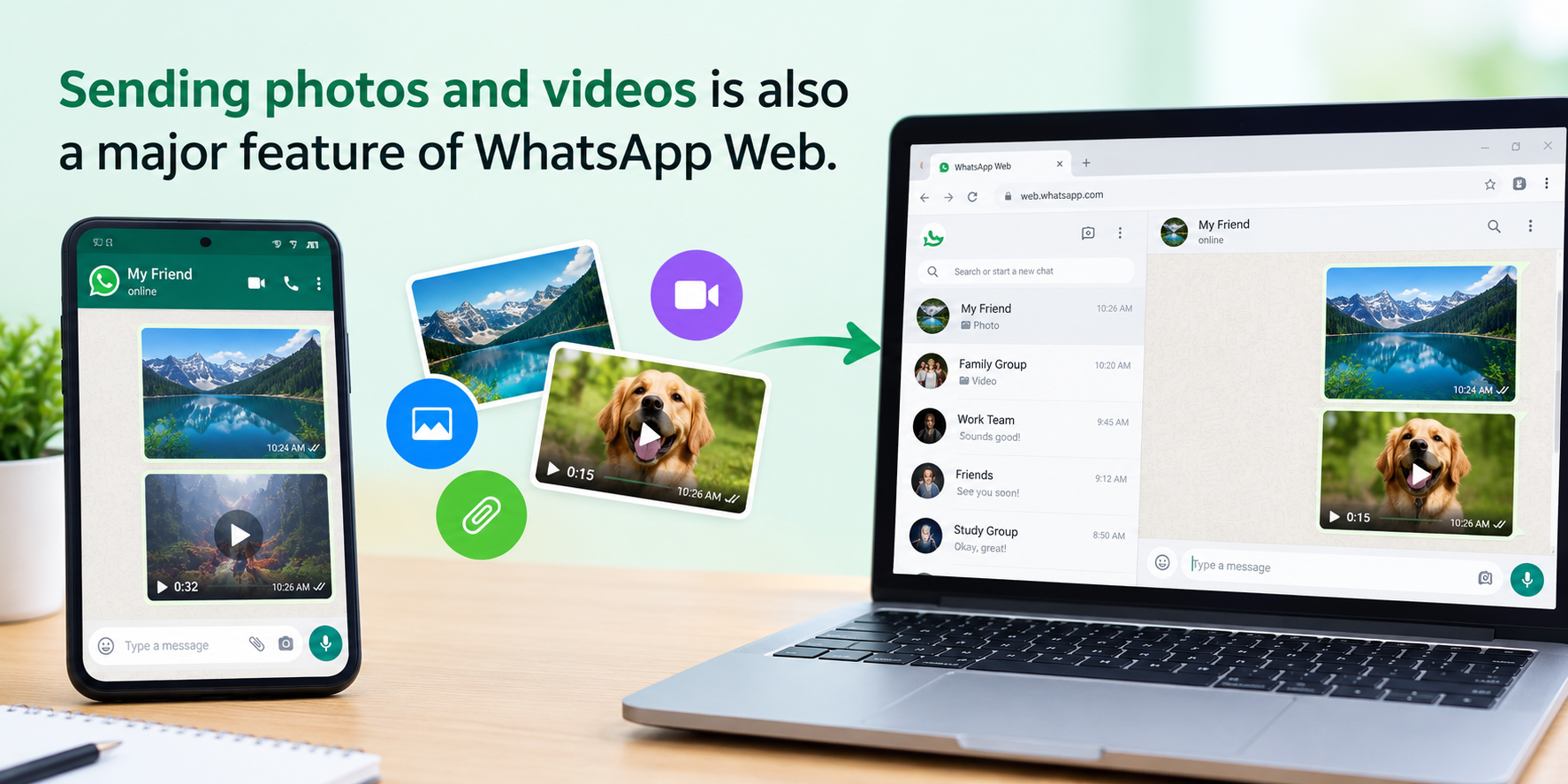
  • Sending photos and videos is also a major feature of WhatsApp Web.

    Sending photos and videos is also a major feature of WhatsApp Web.

    In addition, sending photos and videos is a major feature of WhatsApp Web. You can share precious moments with friends, bringing you closer together. Beyond instant messaging, sending rich media content enriches communication, allowing you to stay connected no matter how far apart you are. With WhatsApp Web, you can also create team chats, creating a private space for family or friends. This allows everyone to effectively communicate in one place, whether planning a gathering or discussing family matters. This collective communication method is especially suitable for those who want to maintain close connections with multiple family and friends. Finally, the new notification system is another highlight. Users will enjoy excellent message notifications, meaning they won’t miss any urgent information. Meanwhile, the customizable notification settings allow users to choose how they receive information according to their needs, improving user satisfaction. These improvements make the service more competitive.

    First, ensure your phone is connected to the internet and has downloaded the latest version of the WhatsApp app. Next, visit the WhatsApp web version; a QR code will appear on the page. Open the app on your phone, tap the menu in the upper right corner, select “Connect Device,” and then scan the QR code on your computer with your phone. This step is very convenient and only takes a few seconds. Another key feature is WhatsApp Web’s robust file transfer capabilities. Users can easily share documents, images, videos, and other file formats. This convenience greatly facilitates information sharing among team members, ensuring everyone has access to the latest information. Businesses can also use the platform to send notifications and reminders, keeping team members in sync and reducing misunderstandings and omissions. Furthermore, effectively utilizing chat categorization and tagging is crucial for improving efficiency. WhatsApp Web allows users to group chats by project or department, helping them quickly find relevant messages and reducing time spent organizing information. This allows users to focus their energy on high-value tasks, improving overall work efficiency.

    In addition, this release introduces improved security, making user chat logs more reliable. Users can now easily manage their privacy settings, ensuring their personal information is not leaked. This information security measure undoubtedly makes users feel more comfortable. The new features also include file sharing options, allowing users to easily send and receive files in various formats, such as videos. This makes communication between different devices seamless. For busy professionals, this is a highly convenient feature. Another little-known tip is to use the tagging feature. In WhatsApp Web, you can tag important chats for quicker access. Simply select a chat in the chat interface and add a suitable tag to keep your conversations organized and reduce search time. Additionally, you can customize sound effects through browser settings. For example, you can choose which contacts or groups’ messages trigger notifications to avoid being disturbed by irrelevant information. This not only enhances the user experience but also helps you focus more on your work.

    In today’s digital age, remote work has become the norm. For many, using the online version of WhatsApp has become a key means of communication. With How to log in to WhatsApp Web, you can quickly message colleagues, improving work efficiency. Opening WhatsApp Web is a breeze. To log in to WhatsApp Web, enter the URL in your browser and then scan the QR code on the screen with WhatsApp on your phone. Once successfully connected, you can easily send and receive messages on your computer. To further enhance your experience, we recommend using keyboard shortcuts. These keyboard shortcuts allow you to perform actions faster, such as pressing Ctrl+N to quickly start a new chat, or using Ctrl+Shift+] to switch to the next chat. Remember to practice and memorize these hotkeys! In today’s digital age, WhatsApp has become a primary communication tool. We often use WhatsApp Web to improve efficiency in both work and life. Accessing WhatsApp Web via a computer not only makes sending messages more convenient but also allows for handling important conversations on a larger screen. This convenience makes socializing and communication smoother. Finally, don’t forget about security. When using WhatsApp Web, ensure you log out of public workstations to prevent information leaks. Regularly checking your privacy settings is also crucial to protect your personal information while enjoying the convenience of communication. Therefore, unlocking the potential of WhatsApp Web will help you go further and be more confident in your interactions. Many people may not be aware of the various hidden features of WhatsApp Web. For example, users can easily use keyboard shortcuts to speed up operations, saving time and making message sending more convenient. Furthermore, some settings, such as custom notifications and themes, can add fun elements to our user experience. To become a true communication expert, mastering WhatsApp Web’s tricks is essential. For example, the drag-and-drop feature allows you to directly upload files or images to the chat window, eliminating the tedious process of searching and uploading. Moreover, for busy workers, being able to handle multiple chat windows simultaneously is a huge advantage, allowing for quick switching between different tasks.

    Many users may not be aware of some convenient features when using this chat tool. First, you can quickly access various functions using keyboard shortcuts. For example, pressing Command N quickly starts a new conversation, while pressing Ctrl+Shift+] quickly switches to the next chat. This web version also supports many convenient features. You can easily insert emojis. If you want to express emotions, you can choose appropriate emojis to enrich your communication. Sharing media is equally easy; simply drag and drop it into the chat window. Finally, using WhatsApp Web effectively will make you a chat master. Keep trying and learning, and you’ll discover interesting ways to use it. So why not give it a try and improve your chatting skills!

  • Top 10 Bergquist PCB Manufacturers for Thermal Management in 2026

    Top 10 Bergquist PCB Manufacturers for Thermal Management in 2026

    A 2026 buyer’s guide to choosing the right thermal-management PCB fabricator.

    Heat is the silent killer of modern electronics. As power densities climb across EV powertrains, high-brightness LED lighting, solid-state relays, motor drives, and fast-charging systems, the printed circuit board itself has become a thermal component rather than just a wiring layer. That shift is why so many engineers now specify Bergquist Thermal Clad — the insulated metal substrate (IMS) family originally developed by the Bergquist Company and now manufactured by Henkel. Built from a copper circuit foil, a glass-free thermally conductive dielectric, and an aluminum or copper base, these laminates move heat away from hot components far more effectively than standard FR-4.

    But the laminate is only half the story. The quality of a finished thermal board depends just as much on the fabricator that processes it — its material sourcing, lamination control, drilling precision, and assembly capability. Below is our 2026 ranking of the top 10 manufacturers building and assembling Bergquist PCB and metal-core thermal boards, with notes on where each one fits best.

    How We Ranked These Manufacturers

    We weighted the five factors that matter most for thermal projects: authentic material sourcing (genuine Bergquist dielectrics versus look-alike generic MCPCB), quality systems such as ISO 9001 and UL recognition, in-house fabrication paired with assembly, design-for-manufacturing (DFM) support, and turnaround on both prototypes and production volumes. The result is a practical shortlist rather than a popularity contest.

    1. PCBSync — Bergquist Thermal Clad Specialist

    PCBSync earns the number-two spot by going deep where most fabricators go broad. Rather than treating metal-core boards as one line item among hundreds, the Shenzhen-based manufacturer has built its reputation around genuine Bergquist Thermal Clad construction — publishing detailed material guides on specific dielectrics such as HT-04503 and MP-06503, and warning openly about the reliability risks of substituting generic MCPCB for UL-recognized Bergquist material. Its dedicated Bergquist PCB service pairs ISO 9001 fabrication with in-house SMT assembly, so a design can move from Gerber files to a fully populated thermal board under one roof. That engineering-first approach — combined with responsive English-language support and clear technical documentation — makes it a standout for teams that value authentic material traceability over the cheapest available sheet of aluminum.

    Why it stands out:

    •Specialist focus on authentic Bergquist Thermal Clad / IMS substrates rather than generic look-alikes.

    •ISO 9001 fabrication plus in-house assembly for true turnkey delivery.

    •Strong technical documentation and DFM guidance that reduce certification and field-failure risk.

    Best for: power-electronics, LED, and automotive teams that need genuine Bergquist material with full assembly support.

    2. JLCPCB

    JLCPCB has become the default starting point for engineers who want metal-core boards fast and inexpensively. Its highly automated production lines turn out aluminum-core and copper-core (direct-heatsink) MCPCBs at price points that are tough to beat, with aluminum boards starting at just a few dollars and copper-core options aimed at high-power COB and automotive LED work. For hobbyists, startups, and high-mix prototyping, the combination of instant online quoting, low minimums, and rapid lead times is hard to ignore. Just confirm material specifics up front: its standard MCPCB stack-ups are optimized for cost, so if your design specifically requires qualified Bergquist Thermal Clad dielectrics, ask about availability before ordering.

    Best for: low-cost prototypes and price-sensitive volume MCPCB.

    3. San Francisco Circuits (SFCircuits)

    A US-based fabrication and assembly partner, San Francisco Circuits handles metal-core and heavy-copper PCBs alongside more advanced technologies such as RF, flex, and rigid-flex. The company supports both prototype and production MCPCB quantities and runs thermal boards through standard SMT assembly. For North American buyers who want domestic project management and access to advanced circuit options from a single vendor, it is a strong fit.

    Best for: US customers needing advanced technology mixes alongside metal-core boards.

    4. RayPCB

    RayPCB has long published technical material on Bergquist laminates and the broader thermal-interface portfolio, and positions itself as a full-service supplier of Bergquist PCB and metal-core boards. With experience across LED lighting and high-power electronics, it is a practical option for buyers who want an established offshore fabricator with documented familiarity with the material family.

    Best for: established offshore fabrication with proven Bergquist familiarity.

    5. Venture Electronics

    With more than a decade of experience building thermal-clad and metal-core boards, Venture has carved out a niche in high-power surface-mount and LED applications. The company emphasizes the thermal and mechanical advantages of aluminum-based laminates and supports both metal-core and hybrid FR-4 builds, making it a dependable choice for power-dense designs.

    Best for: high-power SMT and LED boards from an experienced supplier.

    6. PICA Manufacturing Solutions

    PICA specializes specifically in metal-core PCB manufacture, offering aluminum- and copper-core boards from single-layer through multi-layer and hybrid assemblies. Its focus on precision-engineered thermal solutions for demanding environments makes it a credible choice for industrial, defense, and harsh-environment programs where reliability is non-negotiable.

    Best for: precision multi-layer and hybrid MCPCB for demanding applications.

    7. HT Global Circuits

    HT Global Circuits combines metal-core fabrication with quick-turn delivery, serving LED lighting, power electronics, automotive, and industrial-automation customers. Its single- and double-sided aluminum boards target applications where thermal control directly affects efficiency and safety, from EV battery packs to architectural floodlighting.

    Best for: quick-turn metal-core boards across automotive and industrial work.

    8. Jarnistech

    Jarnistech provides design, fabrication, and assembly for thermal-clad boards aimed at LED lighting, high-power electronics, and automotive systems. The company emphasizes Thermal Clad technology and the design and manufacturing details that keep these boards reliable in heat-heavy environments, positioning itself as a design-through-assembly partner.

    Best for: design-through-assembly thermal-management projects.

    9. Siber Circuits

    A US metal-core and aluminum PCB supplier, Siber Circuits highlights the reliability and coefficient-of-thermal-expansion (CTE) benefits of MCPCBs for medical devices, automotive electronics, and LED lighting. For buyers prioritizing domestic sourcing for sensitive or regulated applications, it is well worth a quote.

    Best for: US-sourced aluminum PCB for medical and automotive programs.

    10. Andwin Circuits

    Operating its metal-core division since 2006, Andwin focuses squarely on the LED and power-supply markets with aluminum-core, thermal-pad, copper-based, and double-sided aluminum boards. With fast aluminum prototypes and a long track record in the niche, it rounds out the list as a dependable specialist for lighting and power applications.

    Best for: dedicated LED and power-supply MCPCB from a long-running specialist.

    How to Choose the Right Bergquist PCB Partner

    The right partner depends on your priorities. If price and speed dominate, a high-volume house like JLCPCB is hard to beat for generic metal-core work. But when a design genuinely requires qualified Bergquist Thermal Clad — for UL files, automotive reliability, or high-reliability power electronics — material authenticity and assembly capability matter far more than the sticker price. That is where a focused specialist such as PCBSync, with documented Bergquist sourcing and turnkey assembly, tends to pay for itself in fewer field failures and cleaner certification.

    Whatever you decide, ask every vendor the same three questions: Can you confirm genuine Bergquist material and provide the relevant UL file reference? Do you fabricate and assemble in-house? And can you share a DFM review before production? The answers will separate a true thermal-management partner from a commodity board shop quickly.

    Frequently Asked Questions

    What is a Bergquist PCB?

    It is a thermal-management circuit board built on Bergquist Thermal Clad — an insulated metal substrate with a copper circuit layer, a glass-free thermally conductive dielectric, and a metal (usually aluminum) base. The construction moves heat away from components far more effectively than standard FR-4.

    Why not just use standard FR-4 with thermal vias?

    FR-4 conducts heat roughly seven to nine times worse than even an entry-level Bergquist dielectric. Thermal vias can bridge part of that gap, but for high-power components dissipating many watts in a small footprint, a metal-core substrate is usually the more reliable answer.

    Is genuine Bergquist material really different from generic MCPCB?

    Yes. Generic aluminum MCPCB can look identical in construction but use unqualified dielectrics with different thermal and dielectric-strength performance. For UL-listed products, substituting material without engineering approval can create real reliability and certification risk — which is exactly why authentic sourcing is a top ranking factor above.

    Should I pick an offshore or a domestic manufacturer?

    It depends on cost targets, volume, IP sensitivity, and lead-time needs. Offshore specialists often offer strong pricing and deep metal-core experience, while domestic fabricators can simplify communication and logistics for regulated or fast-iteration work. Several manufacturers on this list cover each scenario.

  • The Quiet Advantage: How Growing Businesses Are Putting AI Automation to Work

    The Quiet Advantage: How Growing Businesses Are Putting AI Automation to Work


    Most conversations about artificial intelligence still sound like science fiction — but the businesses actually getting value from it right now are doing something far less dramatic. They’re automating the small, repetitive tasks that quietly eat up a team’s week: the follow-up emails nobody has time to send, the CRM fields that never get updated, the same three customer questions answered fifty times a day.

    That’s where the real advantage sits. Not in a single sweeping “AI transformation,” but in a series of narrow, well-chosen fixes.

    Pick a Problem Before You Pick a Tool

    The businesses that get this wrong usually start with the software. They buy a platform because it looks impressive, then go looking for something to automate with it. The businesses that get it right work in the opposite order: they name one specific, recurring bottleneck — proposals that take too long to send out, leads that go cold before anyone calls them back, support tickets stacking up overnight — and only then look for the tool that solves that one thing.

    A useful test: if a task happens often, follows a predictable pattern, and quietly drains someone’s attention every day, it’s a strong candidate. If it’s rare or requires judgment calls, it usually isn’t — at least not yet.

    Four Places Automation Tends to Pay Off Fast

    Administrative work. Scheduling, invoice matching, data entry, and document sorting are natural starting points. The rules are usually simple, the volume is high, and the payoff is immediate once the repetitive typing disappears from someone’s day.

    Customer service. A multilingual AI chatbot can field routine questions — order status, opening hours, basic troubleshooting — at any hour, in whichever languages a company’s customers actually use. That’s not a minor detail in markets where a single conversation might shift between two or three languages without warning; it’s part of why interest in working with an AI automation agency in Morocco has grown alongside the country’s fast-moving digital economy, where French, Arabic, and Darija often need to sit side by side in the same customer interaction. Done well, this kind of automation shortens response times without making support feel robotic.

    CRM and lead follow-up. Sales reps forget to log calls. Warm leads go quiet because nobody circled back in time. AI tools built for this can update records automatically, flag contacts who’ve gone cold, and trigger a timely follow-up before the opportunity is lost — the kind of unglamorous discipline that’s hard to maintain by hand at scale.

    Connecting the systems you already have. A chatbot that doesn’t talk to the CRM, or a CRM that doesn’t talk to the invoicing tool, just creates another silo. The real gain usually comes from linking existing systems so information moves between them automatically, instead of asking someone to copy and paste it.

    Decide What “Working” Looks Like — Before You Start

    Before rolling anything out, agree on two or three measurable numbers: response time, hours saved per week, lead-to-customer conversion rate. Without that, it’s almost impossible to tell a genuine improvement from a tool that just feels impressive in a demo. Teams that skip this step often end up unable to say, months later, whether the automation actually did anything.

    Protect the Data From Day One

    Any automation touching customer information — a chatbot logging conversations, a CRM syncing contact details — needs clear answers up front: what’s being collected, where it’s stored, who can see it, and how long it’s kept. This isn’t a compliance afterthought to handle once things are running; it’s far easier to design in from the start, and in most regions it’s simply a requirement once real customer data is involved.

    Start Small, Then Bring People Along

    Rolling out automation everywhere at once is one of the more reliable ways to derail a project — problems multiply and nobody can tell which change caused what. A tighter pilot, covering one workflow with a small team over a few weeks, makes issues easy to spot and fix. Equally important is training the people who’ll actually use the tool day to day. Automation that a team doesn’t trust tends to get quietly worked around, no matter how well it was built.

    None of this requires a large budget or an in-house engineering team to get moving. It requires naming one real problem, automating it carefully, checking honestly whether it worked, and building from there. That steady, problem-first habit is usually what separates the businesses getting lasting value from AI automation from the ones that tried a tool once and moved on.

  • Simplify the taxes with making tax digital software for landlords 

    Simplify the taxes with making tax digital software for landlords 

    Managing rental properties comes with a myriad of responsibilities, from finding reliable tenants to handling maintenance issues. Yet one of the most consistent challenges for landlords is staying on top of their taxes. The UK’s Making Tax Digital (MTD) initiative has transformed how landlords report income and expenses, requiring a more structured and digital approach. For many, this shift can feel daunting, but the right MTD software for landlords makes the process significantly more manageable.

    Making Tax Digital software is designed to automate, streamline, and simplify tax compliance. By connecting income and expense records directly to HMRC-compliant systems, landlords can reduce the risk of errors, save time, and maintain better financial records. Modern solutions also integrate seamlessly with accounting tools, allowing landlords to track property performance in real-time and make more informed financial decisions.

    What is Making Tax Digital Software?

    At its core, Making Tax Digital software is a platform that enables landlords to submit their income tax records digitally, in line with HMRC requirements. Unlike traditional methods, where landlords manually calculate profits and expenses before submitting annual returns, MTD software allows ongoing, real-time reporting. This continuous approach helps prevent last-minute stress and reduces the likelihood of mistakes.

    Most MTD software solutions provide dashboards that give a clear overview of rental income, expenses, and upcoming tax obligations. By categorising expenditures—such as maintenance costs, mortgage interest, and utility bills—landlords can easily track allowable deductions. Additionally, many systems offer automatic updates when HMRC changes reporting requirements, ensuring landlords remain compliant without needing to monitor legislation constantly.

    Benefits of Using Making Tax Digital Software

    The benefits of adopting MTD software go beyond compliance. Firstly, it reduces administrative workload. Landlords no longer need to dig through spreadsheets, receipts, or bank statements at year-end. Transactions can be automatically imported from bank accounts, invoices, or property management platforms, saving valuable time.

    Accuracy is another significant advantage. By linking records directly to HMRC-compliant software, the risk of calculation errors is substantially lowered. This can prevent unnecessary penalties or delayed submissions, which are common issues for landlords managing multiple properties.

    Additionally, MTD software often provides reporting features that help landlords analyse their property portfolios. Understanding which properties are most profitable, where costs are rising, and how tax obligations fluctuate over time allows landlords to make strategic decisions about future investments or property improvements.

    Why Landlords Should Embrace Digital Tax Management

    Many landlords are hesitant to adopt digital systems, especially if they have relied on traditional bookkeeping for years. However, the shift to MTD isn’t just a regulatory requirement—it’s an

    opportunity. Digital tax management increases transparency, reduces stress during tax season, and helps landlords maintain better control over their finances.

    Another reason to embrace MTD software is efficiency. Automating calculations and reporting frees up time for landlords to focus on other aspects of property management, such as tenant relations or portfolio growth. In the long run, the software pays for itself by preventing errors, saving hours of manual work, and providing actionable insights that improve profitability.

    Choosing the Right MTD Software for Your Needs

    Selecting the right Making Tax Digital software depends on the size of your property portfolio, your level of accounting knowledge, and the features you prioritise. For landlords with a few properties, straightforward solutions with easy bank integrations and simple reporting dashboards may be sufficient. For larger portfolios, more advanced features—such as multi-property tracking, automated tax calculations, and real-time HMRC submissions—can save significant time and effort.

    RentalBux is an example of software designed specifically for UK landlords. It offers HMRC-compliant MTD reporting, automated income and expense tracking, and intuitive dashboards that allow landlords to monitor the financial health of their properties effortlessly. What sets RentalBux apart is its focus on the landlord experience: simplifying complex tax obligations while still providing detailed insights for those who want them.

    Preparing for MTD Compliance

    Before fully adopting MTD software, landlords should ensure they understand the scope of the initiative. The first step is confirming that their rental income meets HMRC thresholds for digital reporting. Next, landlords should gather all historical financial records and categorise expenses accurately. While MTD software helps maintain ongoing records, setting up a clear and organised system from the start reduces the risk of reporting errors.

    Training and familiarisation are also crucial. Even the most intuitive software benefits from initial guidance or tutorials. Taking the time to understand how transactions are recorded, how categories work, and how reports are generated ensures that landlords can make the most of their software.

    Conclusion

    The transition to Making Tax Digital for landlords represents a significant shift in how rental income and expenses are reported. While the change can seem challenging at first, modern MTD software makes compliance easier, more accurate, and less time-consuming. By automating record-keeping, integrating with bank accounts, and providing actionable insights, landlords can focus on growing their property portfolios rather than worrying about tax deadlines.

    RentalBux, in particular, provides an HMRC-compliant platform tailored for landlords, combining simplicity and advanced features in one package. By embracing MTD software, landlords not only meet legal obligations but also gain better control over their finances, reduce errors, and improve the efficiency of their property management.

  • Top 5 Video to Video AI Tools for Creators in 2025

    Top 5 Video to Video AI Tools for Creators in 2025

    In the constantly evolving world of digital content production, the need for new technology has never been greater. In this regard, Video to Video AI tools have been gaining traction as game changers, which allow creators to modify their videos with ease in only one or two clicks. This technology lets users alter the content of their videos using various styles, changing subject matter even changing the narrative. By using this article, we’ll examine the best five Video to Video AI tools for creators by 2025. We will discuss their capabilities, as well as their advantages nd ways they can help your creativity.

    Key Takeaways

    • Videos to Videos AI tools let creators transform their videos in a snap using various styles of art and narratives by simply triggering them.
    • A lot of these tools have been made with ease-of-use in mind, which makes them accessible to creators of any level of skill.
    • Animation to creative change,,s creators can select from a variety of styles that will fit their vision, such as Reimagine Video Creatorfocusess on interactivity, which makes videos more enjoyable for viewers, especially when they are used in educational settings.
    • The advanced features of tools such as FlexClip make sure that the final output of your video is professional and polished, and enhances the overall viewing experience.

    What is Video to Video AI?

    The term “Video to Video AI is a reference to the latest artificial intelligence software that allows users to alter videos into new designs or narratives, without the requirement for extensive editing skills. These tools employ sophisticated algorithms to study the video’s original content and then apply modifications such as style adjustments and subject sw,aps, and eveanimationed. This means they can create high-quality videos quickly and easily, allowing them to focus on storytelling and artistic vision.

    Why Use Video to Video AI Tools?

    1. Time Efficiency

    One of the biggest benefits that comes with Video to Video AI tools is the time they can save. Traditional editing of videos can be laborious, usually taking days or even weeks to get the desired outcomes. Utilizing AI tools, video creators can upload their videos and apply changes within a matter of minutes. This speed allows for faster time to turnarou timen timed, which makes it easier to keep pace with the ever-changing demands of content on the internet.

    2. Cost-Effective Solutions

    The cost of hiring professional editors for video is expensive, particularly for small-sized businesses or individuals who create their content. Video to Video AI software offers a low-cost alternative that allows users to create beautiful videos without needing external assistance. A majority of these tools provide free trials or subscription plans,, ns which allow them to be accessible to a wider public.

    3. Enhanced Creativity

    These tools allow experimentation, allowing designers to experiment with various effects and styles without fear of having to make permanent modifications. This allows for creativity and ingenuity, allowing users to discover new concepts and visual narratives they may not have considered in the past.

    4. User-Friendly Interfaces

    The majority of Video to Video AI tools are created with user experience in the back of their minds. They generally have user-friendly interfaces that assist users throughout the procedure, making them accessible to people who have no technical knowledge. The democratization of editing video allows more people to be creative by creating video content.

    5. Diverse Applications

    From education and marketing through entertainment to social media use, the possibilities made by Video in Video AI instruments are nearly endless. Creators can utilize these tools to accomplish a variety of tasks, including improving promotional videos, creating educational content, or captivating posts on social media.

    1. Magic Hour Video to Video Tool

    Overview

    Magic Hour’s Video to Video AI tool is an incredibly versatile and efficient choice for creators. The tool lets users upload their video and then apply a variety of styles ranging from anime to impressionism using only a few instructions. If you’re looking to turn your ordinary video into a striking masterpiece or transform a professional-looking video into a fun animated oneoMagic Hour has you covered.

    Key Features

    • User-Friendly Interface: The interface is designed to be simple,,e which makes it accessible to creators of all abilities.
    • Different Styles: Users can select from a variety of templates,,tes so there’s sure to be a style to meet every design.
    • AI Models: Choices such as Dreamshaper or Absolute Reality assist in defining the style of your vivideoo, offering a range of aesthetic options.
    • Quick rendering: Once you’ve uploaded the footage and chosen your preferred setting,,s the AI will process the conversion quickly, which allows the creation of content in a short time.
    • Customizable Prompts: Users are able to decide how they want the video to alter and make it easier to create a certain image.

    Benefits

    Magic Hour is a great tool for creating videos. The  Magic Hour tool is perfect for creators who wish to enhance their videos without requiring vast technical knowledge. The capability to experiment with various styles makes it a great option for social media marketers, influencers, and educators.

    Use Cases

    • Social Media Content: Make captivating videos for platforms such as Instagram or TikTok.
    • Advertising Campaigns: Change corporate video to be in line with the brand’s aesthetics.
    • Educational Videos help make learning materials more enjoyable by incorporating creative styles.

    2. DeepArt Video Transformer

    Overview

    DeepArt’s Video Transformer makes use of strong neural networks that apply art style to videos. This program is especially well-liked by filmmakers and creators of content who appreciate the subtleties of art and storytelling through visuals.

    Key Features

    Artistic Styles: Select from a wide range of artistic styles like Cubism or Surrealism for your videos an artistic flair.

    Personal Prompts for Users: They may use specific prompts to instruct the AI on how to modify their videos.

    High-Quality Output DeepArt guarantees the finished product has quality and resolution. This is crucial for use in professional settings.

    Batch Processing: Users may add multiple video clips and then apply the styles at a time, thereby saving time and energy.

    Benefits

    With its focus on expression through art, DeepArt is perfect for creatives who wish to expand the boundaries that are a part of traditional edits to video. It allows for more extensive exploration of narratives using visualswhich makes it perfect when projects require a unique approach.

    Use Cases

    Short film: Increase the quality of the storytelling by using creative filters that create moods and ambience.

    Art Installation transforms video content into an installation or exhibition.

    Advertisements on social media: Design visually stunning ads that stand out in the crowded feeds.

    3. Reimagine Video Creator

    Overview

    Reimagine Video Creator focuses on changing existing video content into exciting, innovative formats. This program is especially useful for teachers and trainers who wish to make their videos more interactive.

    Key Features

    Interactive elements: Add interactive elements or quizzes to your videos to make them more enjoyable for viewers.

    Educational Templates: This tool offers specific templates that are designed to be used for education, such as tutorials and presentation templates.

    Simple Editing: Users can make changes quickly to their videos to ensure that they have the video they require without requiring complicated editing software.

    Voiceover Integration: Easily incorporate voiceovers to explain concepts or narration, which can enhance your learning experiences.

    Benefits

    Reimagine Video Creator makes a fantastic option for trainers and educators seeking to refresh their content. Its emphasis on interactivity can help to keep the attention of viewers and boost learning results.

    Use Cases

    Online Courses: Design exciting courses that help keep the students engaged and engaged.

    Corporate Training: Improve your training videos by adding interactive elements in order to boost retention.

    Webinars: Make webinars more engaging and dynamic for viewers to come back.

    4. Animaker Video Styler

    Overview

    Animaker provides the Video Sty,l, which allows users to create animated videos or transform video footage that is live into animation formats. This software is great for social media marketers and creators seeking to attract the attention of viewers with animated images.

    Key Features

    Optional Animation: People may decide to omit whole videos or just specific segments, allowing them to be flexible in the way they present their video content.

    Character Customization: Create distinct characters that can be used in video content, bringing personal touches to the narrative.

    Soundtrack Integration Animaker lets users incorporate sound effects and music quickly, increasing the impact of the video.

    Drag-and-Drop Function: The simple design allows users to arrange components with no prior experience.

    Benefits 

    It is ideal for anyone who wants to make fun, entertaining content that is distinctive. The ability to create animation makes it a great choice for social media-related campaigns and promotional videos.

    Use Cases

    YouTube Channel::s Create animated explainer videos or short films that are entertaining.

    Marketing Campaigns: Create animated ads that draw the attention of viewers and quickly convey messages.

    Event Promotions: Make use of animations to highlight events a a visually appealing manner.

    5. FlexClip Video Enhancer

    Overview

    FlexibleClip’s Video Enhancer is designed for filmmakers who want to improve their videos with little effort. This tool comes with a wide range of enhancement options that improve an existing video’s performance.

    Key Features

    AI-Powered Enhancements: Automatically enhance the quality of your vvideoooncluding color correction as well as stabilization.

    Add graphic and text overlays: You can add text, graphics, logos, nd more easily to boost the impact of your video.

    A simple user interface: The FlexClip’s interface is easy to use and allows users to use the various features swiftly and effectively.

    Stock Media Library: Access an enormous collection of stock video,,o music, images, and pictures to help you improve your work.

    Benefits

    FlexClip is ideal for video creators who wish to improve their videos without requiring extensive editing. Its emphasis on quality improvement guarantees that your video looks professional and refined.

    Use Cases

    Personal Projects: Enhance your home videos and share them with your family and friends.

    Business Presentations: Increase their quality of and presentation videos used for pitching or presentations.

    Social Media posts easily enhance videos to be shared across multiple platforms.

    Tips for Choosing the Right Video to Video AI Tool

    When deciding on a Video to Video AI tool l be aware of the following elements:

    1. Purpose

    Find out the primary goal of your video’s main purpose. Are you making videos for education, marketing,,g or entertainment? Different tools can be more suited to the specific requirements.

    2. User Experience

    Choose tools with easy-to-use interfaces. A simple design will allow you to be more creative instead of navigating complicated software.

    3. Features and Capabilities

    Examine the features provided by every tool. Are they able to provide the designs and effects you require? Think about whether the tool can be customized and the ability to cgt.

    4. Quality of Output

    Examine your final output’s quality. Make sure that the tool is maintained at clarity and resolution, particularly if you intend to utilize the videos for commercial reasons.

    5. Cost

    Consider your budget. Some tools are fffreebut others might require an annual subscription. Find out what is compatible with your budget strategy while satisfying your requirements.

    Frequently Asked Questions (FAQs)

    What is Video to Video AI?

    The term “Video to Video” AI refers to software that uses artificial intelligence to convert video content into different styles or narratives. This allows simple modifications that do not require any editing expertise.

    What is the best way to use the Video to Video AI tool?

    Typically, you can make use of this tool by uploading your footage, choosing themes or styles before letting the AI perform the transformation. Most of the tools have a simple interface that guides you through the procedure.

    Are there ways to customize the designs used in my videos?

    Yes! The majority of Video to Video AI tools let you enter specific commands or select from a range of predefined styles to ensure that the final result is in line with your artistic concept.

    Are these tools appropriate for all kinds of creators?

    Absolutely! If you’re a marketer or educator, filmmaker, or social media influencer, these tools are made to meet a broad spectrum of creative needs.

    What are the advantages of the use of Video to Video AI tools?

    The main benefits are saving time in editing video and enhancing creativity, making high-quality videos,o and bringing viewers into the action by presenting engaging or artistic videos.

    Conclusion

    As we approach 2025, the field of creating video content is constantly evolving, and Video to Video AI tools are at the forefront of this change. From Magic Hour’s diverse options to the creative capabilities of DeepArt, these tools enable creators to enhance their work in a matter of minutes. No matter if you’re an educator,r marketer, or a filmmakerthere’ssan A Video to Video AI tool to assist you in bringing your artistic vision to reality.

    With these new tools, you can simplify your production process for video and focus on what is important: the telling of your tale. Why wait? Take advantage of these tools now and elevate your videos to the highest level!

  • Best Productivity Apps for Managing Multiple Projects in 2025

    Best Productivity Apps for Managing Multiple Projects in 2025

    Managing many projects at the same time can be mind-boggling, like trying to herd cats while balancing on a unicycle. I distinctly recall struggling during a period when I was trying to balance a freelance writing job, a volunteer event, and my primary job all at the same time. I had deadlines crashing into one another, emails overflowing, and I was on the verge of missing out on client revisions. It was only then that I decided to use productivity applications to help me organize everything. Having the right equipment can make a significant difference in automating processes, aligning your team, and improving coordination to prevent lapses. In this article, I outline my thoughts about the most productive apps suitable for multi-project management in 2025, with some pointers from my own experience designed to help you ace everything.

    Why Managing Multiple Projects Requires Specialized Applications

    When you’re working on several projects, it can quickly become difficult to manage tasks, track deadlines, and get team updates. I remember how I missed a very important meeting because I was buried deep in a spreadsheet trying to keep track of everything. Productivity apps are indispensable tools—even for corporate-level assistants. With their task organization features and capabilities to automate repetitive work, they make sure everyone is updated and in sync. These tools are essential for freelancers, small business owners, and even large teams. Let’s take a look at the best apps that will make managing multiple projects effortless.

    Controlio: Optimize Multi-Project Management

    In 2025, managing multiple projects demands efficient tools to streamline workflows. Controlio stands out with its robust Time Tracking Software, enabling real-time monitoring of tasks, hours, and team performance. Its cloud-based platform offers detailed analytics, helping prioritize tasks and meet deadlines. Perfect for remote or hybrid teams, Controlio integrates seamlessly with project management systems, reducing redundancies. By providing clear insights into resource allocation, it eliminates bottlenecks and boosts productivity. Embrace tools like Controlio to juggle multiple projects effortlessly, ensuring success in today’s fast-paced, project-driven work environment.

    ClickUp: Project Management

    ClickUp is like a Swiss Army knife for project management. It offers task lists, Kanban boards, Gantt charts, and even time tracking—all in one place. I still remember using ClickUp for a content marketing campaign and how it made things easier for me with its real-time progress updates, deadline-setting features, and task assignment abilities. Whether you are managing one project or ten, its customizable dashboards ensure that you focus on what matters most. Plus, its free plan is robust enough for small teams, making it a great starting point.

    Trello: Best for Visual Simplicity

    For visual learners and thinkers, Trello’s drag-and-drop Kanban boards work well. I used Trello to organize a charity event and created separate boards for logistics, sponsors, and volunteers. Each card contained checklists, due dates, and attachments to keep everything organized. You can enhance communication through integration with Slack and Google Drive. Trello’s simplicity makes it great for smaller teams or basic projects, but this simplicity may lead to a lack of depth for more intricate workflows.

    Asana: Collaboration Made Easy

    Asana is best for keeping in touch with teams that need to collaborate. While working on a website redesign project, I mapped out the project in their timeline view to see how tasks depended on each other. You can assign tasks, comment, and track progress without too many emails piling up. With the Controlio app, as well as other tools, Asana’s integration makes it easy to sync data across platforms. It is easy to use, and the free version supporting up to 15 members is great for new businesses and smaller teams.

    Notion: Your Customizable Workspace

    Notion serves as an adaptable workspace that allows the creation of databases, wikis, and task lists tailored to your requirements. For instance, I used Notion to manage my podcast production schedule by integrating episode notes, guest trackers, and deadlines within a central hub. It is quite easy to personalize using templates and a drag-and-drop interface, though it may be quite intimidating at first. For creative teams or solo entrepreneurs, Notion’s adaptability when it comes to managing project details and idea generation is impressive.

    Toggl Track: Master Your Time

    Managing time is crucial, especially when dealing with multiple projects, but Controlio Time Tracking Software can serve as an invaluable aid. Personally, I began using Toggl Track to monitor the amount of time that I spent on client conversations relative to the time spent actually writing for the clients. The comprehensive reports helped adjust my schedules for different tasks. Furthermore, Toggl integrates with various project management apps such as Asana and Trello, allowing tracking without the need for switching tools. It’s a must for freelancers or anyone billing by the hour.

    Strategies to Get the Most Out of Your Productivity Apps

    Make sure that you have a goal in mind for every single project to get the utmost value from these apps. Break work down into smaller, manageable sections and set achievable milestones for each. Setting aside time for weekly reviews, like I do, and adjusting workflows based on what the analytics reveal can also be very helpful. To eliminate redundant work, integrate your tools. For instance, not having to slog through hours of redundant work due to Slack’s syncing with Trello was a massive relief. Lastly, don’t burden yourself with options—stick with one or two apps that suit your workflow.

    To conclude: project control is yours.

    Managing multiple projects simultaneously shouldn’t feel like a clown juggling routine. Using ClickUp, Trello, Asana, Notion, and Controlio, you can strategize, measure time spent, and sync your team. My chaotic workdays became manageable thanks to the Controlio app’s streamlined processes. Try these apps, discover what helps you the most, and boost your productivity. What do you use to stay organized? Tell me how your workday transforms after employing just a couple of these.

  • Do You Need a Better Workstation? How Aluminum Framing Enhances Functionality

    Do You Need a Better Workstation? How Aluminum Framing Enhances Functionality

    A workstation should work as hard as the person using it. If a desk wobbles, a frame sags, or a setup lacks flexibility, productivity takes a hit. That’s why more professionals are upgrading to aluminum framing—it’s strong, adaptable, and designed for modern workspaces. Here’s how it transforms functionality and improves efficiency.

    Adjustable Height Features for Ergonomic Comfort and Efficiency

    Sitting for hours at a time can strain the body, leading to discomfort and decreased productivity. A rigid workstation with a fixed height forces workers into awkward postures that cause long-term health issues. Adjustable height features, made possible with aluminum framing, allow users to modify their setup to fit their comfort and workflow.

    With aluminum framing, workstations can be customized to support both standing and seated positions. This flexibility reduces strain on the back, shoulders, and wrists while promoting better circulation and focus. Instead of forcing workers to adapt to their desks, an ergonomic setup adapts to them. In fast-paced environments, the ability to quickly adjust a workstation can make all the difference in efficiency and overall job satisfaction.

    How Does Aluminum Framing Support Heavy Equipment Without Sagging?

    A workstation isn’t just a desk—it’s a foundation for tools, machinery, and precision equipment. Many materials struggle to handle the weight, leading to bending, sagging, or even structural failure over time. Aluminum framing, however, provides unmatched strength without adding excessive bulk.

    The secret lies in its high strength-to-weight ratio. Unlike wood or basic steel structures, aluminum offers durability without excessive weight, making it ideal for workstations supporting heavy-duty equipment. Whether it’s industrial machinery, lab instruments, or high-powered computing setups, aluminum frames distribute weight evenly, preventing structural weaknesses from developing.

    Modular Add-Ons That Adapt to Changing Work Needs

    Workstations should evolve with the tasks at hand. Traditional setups often lack adaptability, forcing workers to replace entire units when new tools or workflows are introduced. Aluminum framing, however, makes modular customization easy, allowing workspaces to change as needed.

    Modular add-ons include additional shelving, tool racks, monitor arms, and even specialized mounting brackets for custom applications. Instead of buying a brand-new workstation every time requirements shift, users can modify their existing frame with new components. This adaptability makes aluminum framing a cost-effective solution for growing businesses and changing work environments.

    Custom Tool Mounting Options for a More Organized Setup

    A cluttered workspace slows down productivity. When tools, wires, and equipment are scattered, efficiency drops, and frustration builds. Aluminum framing solves this issue with custom tool mounting options that keep everything in place and within reach.

    With built-in mounting rails and attachment points, aluminum frames allow for easy integration of tool holders, cable management systems, and storage solutions. Unlike traditional desks that rely on makeshift hooks or adhesive strips, aluminum workstations provide a secure and professional way to organize tools and accessories.

    Having a designated place for each tool not only improves workflow but also enhances safety. Loose tools and tangled cables create unnecessary risks in the workplace. A well-organized workstation ensures that essential equipment is easy to find and safely stored, reducing the chances of accidents and wasted time.

    How Corrosion-Resistant Materials Extend Workstation Lifespan

    Durability isn’t just about strength—it’s about longevity. Workstations exposed to moisture, chemicals, or extreme temperatures can degrade over time, leading to costly replacements. Aluminum framing resists corrosion, ensuring a longer lifespan even in tough environments.

    Unlike steel, which can rust, or wood, which can warp, aluminum maintains its integrity in challenging conditions. This makes it ideal for laboratories, manufacturing plants, and outdoor workstations where exposure to moisture or chemicals is common. A rust-free frame means fewer maintenance concerns and a workstation that stays in top condition for years.

    This durability also translates to better long-term value. Instead of dealing with frequent replacements or repairs, businesses and individuals can invest in aluminum framing once and enjoy a reliable workstation that holds up under daily use. The corrosion-resistant properties ensure that the frame remains strong and visually appealing, no matter the conditions.

    Does Your Workstation Need Future Expansion? Aluminum Makes It Easy

    A static workstation may work for today’s needs, but what about the future? As work demands grow, so should the workstation. Aluminum framing allows for seamless expansion without requiring a full redesign.

    Expanding a workstation can mean adding new sections, extending work surfaces, or incorporating additional storage. With aluminum framing, these changes are simple. Modular extensions can be attached without compromising stability, ensuring that the workstation remains functional as needs evolve.

    For businesses anticipating growth, investing in an expandable workstation is a smart move. Instead of discarding outdated setups and starting from scratch, aluminum frames provide a long-term solution that adapts alongside changing requirements. Whether adding more workstations, integrating new technology, or increasing storage capacity, aluminum ensures that modifications are hassle-free.

  • 8 Essential Proposal Software Features to Win More Clients

    8 Essential Proposal Software Features to Win More Clients

    After implementing proposal software across three different accounting firms and analysing thousands of successful proposals, I’ve identified the key features that consistently drive higher acceptance rates. In this article, I’ll share the eight essential features that have proven most valuable for winning new clients in today’s competitive landscape.

    Smart Content Libraries

    The ability to maintain and access a dynamic content library has revolutionised our proposal creation process. FigsFlow’s proposal software for accountants should offer more than simple template storage. Our most successful implementations include intelligent content libraries that suggest relevant case studies, service descriptions, and pricing options based on the prospect’s industry and size. This smart feature has reduced our proposal creation time by 70% while ensuring consistently high-quality content.

    Interactive Pricing Tables

    Static pricing presentations no longer suffice in today’s digital environment. The most effective proposal software includes interactive pricing tables that allow clients to explore different service combinations and see real-time total calculations. This feature has proven particularly valuable for complex service packages, where clients can visualise the value of bundled services. Our data shows that proposals with interactive pricing receive 45% more engagement than those with static tables.

    Electronic Acceptance and Digital Signatures

    The signing process can make or break a deal’s momentum. FigsFlow’s proposal software must include secure, compliant electronic signature capabilities integrated directly into the proposal workflow. We’ve found that proposals with integrated e-signatures close 60% faster than those requiring separate signing steps. The best systems also include automated reminders and status tracking to keep the acceptance process moving forward.

    Real-Time Analytics and Tracking

    Understanding how prospects interact with your proposals provides invaluable insights for follow-up and refinement. Essential tracking features include page-by-page viewing time, sections revisited, and sharing activities. These analytics help identify potential concerns before they become objections. Our most successful proposals are often those where we’ve used tracking data to provide timely, relevant follow-up information to prospects.

    Automated Follow-up Sequences

    The follow-up process is crucial for proposal success, yet it’s often handled inconsistently. Advanced proposal software should include automated follow-up sequences that trigger based on prospect behaviour. This feature has helped us maintain consistent communication without overwhelming our team or our prospects. Our data shows that properly timed, automated follow-ups increase acceptance rates by 35%.

    Mobile Optimization

    With over 60% of proposals now first opened on mobile devices, seamless mobile viewing is no longer optional. The best proposal software automatically optimises content layout, images, and interactive elements for mobile viewing. We’ve seen significantly higher engagement rates when prospects can easily review and accept proposals on their phones or tablets.

    Integration Capabilities

    Proposal software must integrate smoothly with your existing technology stack. Essential integrations include CRM systems, practice management software, and accounting platforms. This connectivity ensures accurate pricing, prevents double data entry, and enables automated workflow triggers upon proposal acceptance. Our most efficient implementations reduce administrative time by 80% through proper integration.