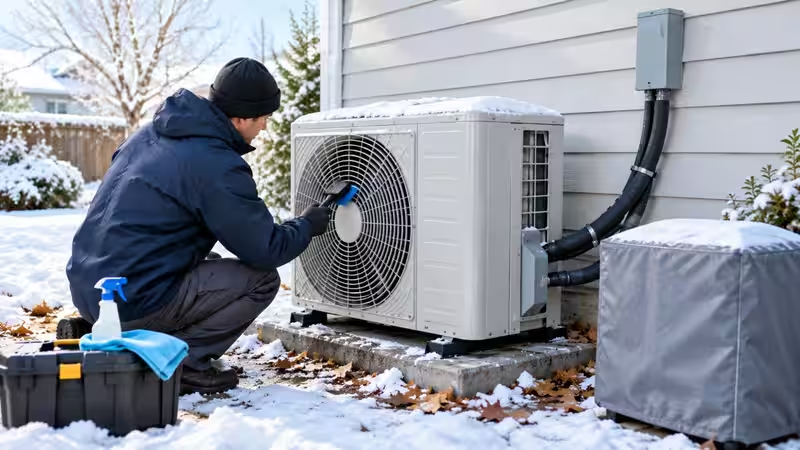
For a conventional cooling-only central air conditioner, winter preparation usually means following the manufacturer’s shutdown guidance, gently clearing debris, checking the outdoor unit’s surroundings, and addressing known faults before the next cooling season. The exact steps depend on the equipment. If the outdoor unit is a heat pump used for heating, it must remain able to operate in winter; do not shut it down or cover it as though it were a cooling-only AC.
At Adam’s Air Systems, we encourage Hamilton homeowners to identify their system before following a seasonal checklist. A neighbour’s routine may be unsuitable for your model. This guide explains the questions to ask, the safe checks you can make, and when an HVAC technician should review the system.
Is your outdoor unit an air conditioner or a heat pump?
This is the most important starting point. A cooling-only air conditioner and a heat pump can look similar outdoors, but their winter roles differ. A heat pump may be part of the home’s heating system and needs unobstructed airflow while operating.
Check the equipment model, installation documents, and thermostat setup, or ask the installer. Do not decide from appearance alone. If you are unsure, leave operating settings and power arrangements unchanged until a qualified technician confirms the system.
We can discuss the equipment you have and what seasonal care is appropriate. Identifying it correctly prevents a well-intended cover or shutdown from interfering with heating.
What does the manufacturer recommend?
Read the owner or maintenance instructions for the exact model. Look for guidance on seasonal shutdown, cleaning, covers, clearances, and startup. Some equipment has specific power or crankcase-heater considerations, so a universal instruction to switch off every disconnect is not appropriate.
If the manual is missing, use the model information to request the correct document from the manufacturer or service provider. A generic internet checklist should supplement the product guidance rather than override it.
Keep those instructions with your HVAC records. The next homeowner or service technician will also benefit from knowing which system is installed and what maintenance has been done.
Should you turn off power to the outdoor unit?
Follow the exact equipment instructions and advice from a qualified HVAC professional. The correct approach depends on the system, controls, and manufacturer requirements. Do not turn off an outdoor unit needed for winter heating.
Avoid opening electrical compartments or handling wiring as part of seasonal preparation. An outdoor disconnect is not a substitute for understanding the equipment. If it is damaged, loose, or unfamiliar, ask a technician to assess it.
We would rather confirm a model-specific procedure than recommend a blanket action that may not suit your installation. Tell us the equipment type and whether it has any known electrical or control issue.
How should you clear leaves and debris?
With the system in the appropriate safe state according to its instructions, remove loose leaves, twigs, and debris from around the outdoor unit. Keep landscaping and stored items from blocking the required space. Use a gentle approach and avoid pushing debris into the coil.
Do not pressure-wash delicate fins or bend them while cleaning. If the coil needs more than light external care, arrange professional maintenance. Cleaning chemicals and methods should be compatible with the equipment.
Check what falls from nearby trees or roofs. A location that repeatedly collects leaves may need more frequent attention. The goal is clear surroundings and appropriate airflow, not an aggressive cleaning session that damages the unit.
Should you cover the air conditioner?
Only use a cover arrangement if it is appropriate for the equipment and consistent with the manufacturer’s guidance. A full tight wrap can trap moisture or encourage pests, and a cover on operating equipment can obstruct airflow. A heat pump used for heating must not be covered in a way that prevents operation.
If a cover is recommended, use the correct type, fit, and fastening method. Remove it before the system operates. Do not place a heavy improvised board, bricks, or other objects on equipment without confirming suitability.
We can discuss protection from falling debris in the context of your site and model. More wrapping is not automatically more protection.
What about snow and ice?
Plan to keep access and required clearances available through winter. Avoid piling shovelled snow against the unit or covering components that must remain accessible. For a heat pump, follow its operating and snow-clearance guidance specifically.
Do not chip ice from coils with sharp tools or pour hot water on equipment as a casual fix. If unusual ice buildup affects an operating heat pump, have it assessed. Defrost operation and abnormal icing are different matters.
For a cooling-only AC, look for roof runoff or ice fall that may threaten the installation. Any protective structure should be reviewed so it does not violate clearances or become a new obstruction.
What can you inspect without dismantling anything?
Look at the outdoor unit’s general condition, visible mounting, surrounding grade, and accessible insulation. Note obvious damage, unusual movement, or a spot where water collects. Do not remove panels or disturb refrigerant tubing.
Inside, recall how the system performed during the last cooling season. Did it cool unevenly, freeze, leak water, make a new sound, or struggle to reach the set temperature? A shutdown checklist cannot resolve those faults.
Write down the symptoms while they are still fresh. Our air conditioner repair and replacement service can investigate them rather than leaving a known problem until the first hot day.
Should you repair a problem now or wait until spring?
A known problem deserves a discussion before it is forgotten. Some diagnostic work may depend on suitable operating conditions, but a technician can explain what can be assessed now and what should be scheduled later. Do not run cooling equipment in unsuitable outdoor conditions merely to reproduce a summer symptom.
If there is visible damage, a suspected electrical issue, or a history of repeated failures, tell us. The right timing depends on the fault and the system. A professional review can help you plan without promising that every test is appropriate in cold weather.
If replacement is being considered, gather the service history and your comfort concerns. The choice should be based on condition, repair options, system suitability, and your priorities, not only the age printed on the label.
Does the indoor filter still matter in winter?
In many central systems, heating and cooling share indoor air-handling components. The furnace or air handler may continue using a filter after cooling ends. Follow the equipment guidance for the correct filter type, fit, and inspection or replacement schedule.
Do not assume a thicker or more restrictive filter is always better. Airflow requirements matter. If you are unsure which product is suitable, ask a technician rather than choosing solely by a marketing rating.
Keep return and supply openings unobstructed as appropriate for the system. A seasonal transition is a useful time to review indoor airflow, but it is not a reason to change settings or duct arrangements without understanding them.
How does furnace preparation connect to AC shutdown?
The end of cooling season often coincides with the start of heating use. Confirm that the thermostat is set appropriately and that the heating system is ready according to its maintenance requirements. If you noticed heating problems last winter, arrange a discussion rather than waiting for a breakdown.
Our furnace repair and replacement services address heating concerns separately from outdoor AC care. A furnace noise, heating failure, or airflow issue should be described as its own symptom.
Do not use an AC checklist to evaluate combustion safety or a gas appliance. Gas odour, a carbon monoxide alarm, or other urgent concerns require the appropriate emergency response and qualified help.
What should you do with hoses, furniture, and stored items?
Keep seasonal storage away from the outdoor unit and its service area. A patio cover, stacked furniture, garden tools, or snow equipment can block access even when the AC is not running. For a heat pump, that obstruction can also affect operation.
Avoid leaning items against refrigerant lines or using equipment as a shelf. Take care when trimming plants so tools do not strike the coil or tubing. Leave the required clearance identified by the manufacturer.
If you are planning landscaping or a new enclosure, show the proposal to a qualified HVAC professional first. An attractive screen must still allow airflow, servicing, and safe operation.
What should you record for next spring?
Keep the model and serial number, maintenance dates, repairs, filter information, and any unresolved concerns. Note whether a cover was installed and what must be removed or restored before operation. If a technician provides startup instructions, retain them with the shutdown record.
Make a simple reminder to inspect the surroundings after winter. Leaves, animal activity, or weather can change conditions while the system is idle. A brief visual check before cooling season is more useful than assuming everything remained as it was.
Do not turn a written reminder into an instruction to perform electrical or refrigerant work yourself. The record should help you coordinate appropriate maintenance.
How should you prepare a vacant property?
A property left unattended needs a plan for heating, monitoring, and equipment access. The AC is only one part of that plan. Consider who will notice a heating failure, water problem, or damage after a storm.
Follow the requirements of the heating system, insurer, and property arrangement. Do not shut down an entire HVAC system because the cooling season is over if it also provides necessary heat. Have a qualified professional explain what should remain operating.
If the building is being winterized, coordinate the HVAC work with plumbing and other relevant services. A whole-property shutdown requires more than placing a cover over the outdoor unit.
What can Adam’s Air Systems help with?
We can discuss system identification, known cooling faults, maintenance needs, and heating concerns. Tell us whether the equipment is cooling-only or a heat pump if you know, and share the model and any symptoms from summer.
You can contact Adam’s Air Systems to arrange the appropriate next step. We will consider the equipment and conditions rather than apply the same shutdown advice to every home.
If a diagnostic test needs different weather conditions, we can explain that limitation and help plan the work. Clear expectations are better than an unnecessary cold-weather cooling test.
What should a seasonal service conversation cover?
Ask which maintenance tasks are appropriate for your model, whether any summer symptoms need investigation, and what the spring startup will involve. Confirm who will remove a cover, restore any model-specific settings, and check the equipment before use. If different household members handle seasonal chores, make sure the instructions are shared.
Also mention planned roof work, siding work, or landscaping near the unit. Those projects can affect access, protection, and clearances. Coordinating them with equipment care helps prevent accidental damage while another contractor is working nearby.
Frequently asked questionsCan I use the same winter checklist for a heat pump?
No. A heat pump used for heating needs to remain operational and unobstructed. Confirm the equipment type and follow its specific guidance.
Should every central AC be fully covered?
No universal rule applies. Follow the manufacturer’s recommendation for the exact model and avoid trapping moisture or obstructing operating equipment.
Can I pressure-wash the outdoor coil?
Do not use aggressive cleaning that can damage fins or components. Follow approved methods and seek professional care when needed.
Is it okay to test cooling on a cold day?
Do not operate outside the manufacturer’s permitted conditions. A technician can advise what can be diagnosed safely at the time.
Do I stop changing the filter after summer?
Not if the heating system continues using that filter. Follow the equipment’s maintenance guidance and use the correct product.
What if the AC was struggling at the end of summer?
Record the symptoms and discuss them with us. A seasonal shutdown does not repair the underlying fault.
Protect the system by identifying it first
We want Hamilton homeowners to prepare equipment without creating a new problem. Confirm whether you have cooling-only AC or a heat pump, use the exact manual, keep the surroundings clear, and raise known faults with a technician. A careful, model-specific plan is the best starting point for the change in seasons.