A Hamilton Homeowner’s Use Guide
Your new lawn looks ready the moment the last roll goes down. It is tempting to move the patio furniture back, let the dog run or take the usual shortcut across the yard. We recommend treating fresh sod as a newly installed living surface. Its leaves may already be green, but its roots still need to grow into the prepared soil below. Regular traffic can shift the rolls, open seams and compress a wet base before that connection develops.
A common rule of thumb is to limit use for roughly the first couple of weeks, but a calendar alone cannot tell you whether your Hamilton lawn is ready. Temperature, rainfall, watering, soil and the amount of rooting all affect the answer. At Monarch Landscaping, we advise homeowners to distinguish an occasional careful step needed to inspect or water the lawn from normal play and repeated travel. Here is how to make that decision without turning a guideline into a false promise.
The first days: give the sod a chance to settle
Immediately after installation, we want the sod to stay in close contact with the soil and receive the moisture it needs. Each roll is a living plant with a shallow layer of roots; those roots have not yet bound it to your property. A person walking the same route across damp sod can make footprints or move a corner. A pet chasing a ball can tear seams before they have joined visually.
Plan access before the job starts. If a gate, shed, bin or outdoor faucet can only be reached across the new lawn, let us know so we can discuss a practical temporary route. Keep hoses arranged to avoid repeated dragging. If someone must step onto the turf for a quick check, use a careful path, avoid saturated areas and stay off any visibly loose edge. This limited access is different from opening the area for everyday use.
Why rooting matters more than a fixed date
The sign we are looking for is root attachment to the soil underneath. Once roots begin to knit into the base, the sod resists a very gentle lift at an edge. Test sparingly at a representative spot when the lawn is not saturated, and stop if a section readily pulls up. Do not tug repeatedly across the yard or treat one well-rooted corner as proof that every area has established. Shaded sections and exposed edges may progress differently.
Even rooted sod is still developing. A light, occasional walk may be reasonable before an afternoon of games or heavy furniture. Think in stages: necessary inspection first, gentle mowing when appropriate, then progressively more routine use. If the grass is sliding, the surface is soft underfoot or seams are opening, give it more time and ask the installer for guidance. We would rather adjust the timeline to the lawn than promise an exact day regardless of conditions.
Watering can change how traffic affects the yard
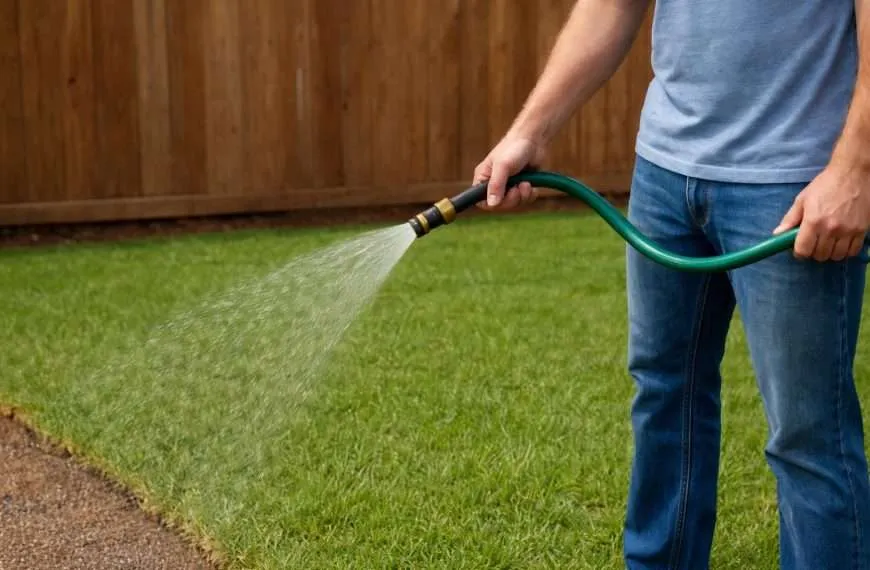
Moisture is essential, especially soon after installation, but a soggy soil base is easy to rut. Check beneath an edge to understand whether water is reaching the soil instead of judging only by wet grass blades. Exposed strips near a sidewalk may dry faster, while low spots can stay wet longer. Rainfall and temperature alter how often you need to irrigate. Follow the care instructions for your site and adjust them with weather, rather than watering by the clock indefinitely.
Our Hamilton sod installation service includes aftercare guidance, and we also offer sod watering services for homeowners who need help managing the first weeks. If the lawn is wet enough to leave footprints, stay off it until the surface firms. If it is drying out and edges curl, address that promptly. Neither heavy watering nor traffic will repair a section that lost contact with its base.
What about pets and children?
Pets and children tend to use lawns intensely and unpredictably. Running, digging and sharp turns are harder on new sod than a careful walk. Arrange a temporary pet relief route or another outdoor area if possible. Pick up waste promptly, and watch for repeated use of the same small patch. One narrow track can wear before the rest of the yard is ready.
For children, explain that the lawn is being established, just as a newly planted garden needs protection. A path around the sod or a nearby park can make the waiting period easier. When you reintroduce play, start with light use and check for movement or soft ground afterward. The practical question is not whether one footprint will destroy the lawn. It is whether repeated activity will undo the soil contact and rooting you paid to create.
When is the first mow appropriate?
Mowing is often the first necessary traffic on the new lawn. We wait until the sod has attached sufficiently, the soil is firm enough to support the mower and the grass has grown enough to require cutting. The exact timing varies. Make the first cuts with a high mower setting and avoid removing too much leaf at once. Sharp turns with a heavy mower on a damp surface can shift or mark the turf, so take gentle passes.
Do not let an arbitrary date force a mow while the lawn is still loose. Conversely, allowing grass to grow excessively tall can make the first cut more stressful. Check rooting, moisture and height together. If one area is lagging, discuss that area with the installer rather than assuming a uniform schedule across a sunny front yard and a shaded side yard.
Furniture, equipment and events need a separate decision
A patio chair moved for a photograph is not the same as a table left on a lawn for a week. Heavy items block light and concentrate pressure. Keep furniture, planters, play structures, parked equipment and temporary storage off the new sod until it has established enough for the intended load. Even afterward, move objects periodically and check the grass underneath.
If you are planning a gathering, renovation or delivery, schedule sod installation with that use in mind. Sometimes installing after the event is wiser than trying to rush establishment. If a project requires workers to cross the yard, tell us before installation; a protected access route may be more practical than hoping new grass can absorb repeated wheelbarrow traffic. The result looks immediate, but it still needs a settling period.
If someone walked on it too early
Do not panic over a single careful step. Look for a shifted seam, depressed soil or an edge lifted from the base. If the section remains flat and healthy, continue to protect it and monitor it. If a roll moved or the base was disturbed, photograph the area and contact the installer before making a broad repair. Avoid pressing sod into a muddy rut and assuming the grade will fix itself.
Yellowing or browning is not automatically caused by footsteps. Check moisture and soil contact, including at the edges, and describe when the change appeared. A problem found early is easier to assess. Our advice will depend on what we see, not on a generic chart of days after installation.