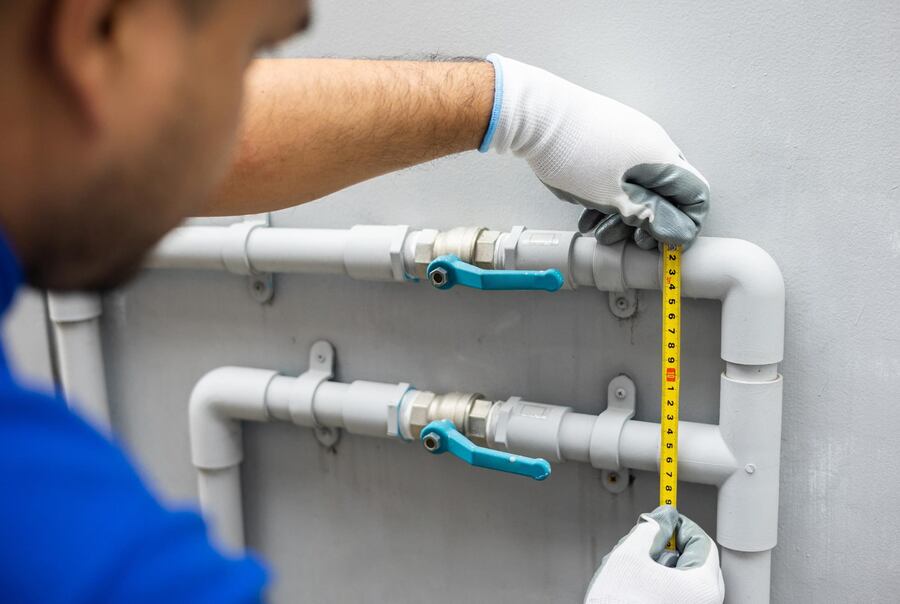
When a plumbing problem appears, the first instinct is often simple: fix whatever is leaking and move on. Sometimes that’s exactly the right approach. Other times, a small repair is only covering up a much bigger problem.
Older pipes, recurring leaks, corrosion, and poor pipe layouts can make plumbing decisions surprisingly complicated. Should you repair one damaged section? Should the line be moved? Or has the system reached the point where replacing large sections of piping makes more sense?
There isn’t one answer for every property. The right choice depends on the condition of the pipes, the location of the problem, the age of the system, and what you plan to do with the property in the future.
When a Small Repair Makes Sense
A spot repair is often appropriate when the rest of the plumbing system is in reasonably good condition and the problem is isolated.
For example, if one accessible section of pipe has developed a crack while the surrounding pipes look healthy, replacing that damaged section may be all that’s needed. There’s little reason to replace an entire system when one component has simply reached the end of its useful life.
Spot repairs can also reduce disruption. You may avoid opening large sections of walls or floors, and the job can often be completed more quickly than a major repiping project.
Still, the key word is “isolated.” If similar leaks have already appeared in several areas, a small repair may only delay the bigger conversation.
Recurring Leaks Tell a Different Story
One leak can be bad luck. Several leaks over a short period are harder to dismiss.
Repeated failures may indicate aging materials, corrosion, excessive water pressure, mineral buildup, or another underlying issue. If a technician keeps replacing one section after another, the total cost can eventually approach the price of a more comprehensive solution.
That’s why it’s useful to look at the plumbing system as a whole rather than treating every leak as an unrelated event.
A professional inspection can help determine whether you’re dealing with one bad section or a pattern that suggests broader deterioration.
When Rerouting May Be the Better Option
Sometimes the pipe itself isn’t necessarily the biggest problem. Its location is.
During renovations, remodeling, or major repairs, existing plumbing may run through difficult-to-access areas. In those situations, a reroute can provide a practical alternative.
Rerouting involves creating a new path for the plumbing rather than continuing to use a troublesome section. This can be useful when a pipe runs beneath a slab, through an inaccessible area, or somewhere that would require significant demolition to repair repeatedly.
It can also make sense when a property’s layout has changed. Adding a bathroom, moving a kitchen sink, or remodeling a room may create a need for a different plumbing configuration.
The goal isn’t simply to move a pipe for the sake of moving it. A good reroute should create a more practical, serviceable path.
Repiping Is a Bigger Decision
If the plumbing system has widespread deterioration, repipe work may be worth considering.
Repiping means replacing substantial portions — or potentially most — of the existing supply piping. It’s a much larger project than repairing a single leak, so it shouldn’t be recommended casually.
However, there are situations where continuing to patch an aging system doesn’t make financial or practical sense. If leaks are happening repeatedly, water pressure has become unreliable, or the pipes show widespread corrosion, replacement may provide a longer-term solution.
The decision should be based on the condition of the system rather than fear. A good professional should explain what they see and why replacement is being considered.
How the Age of Your Plumbing Changes the Conversation
The age of a plumbing system matters, but age alone doesn’t tell the entire story.
Different pipe materials have different characteristics and expected service lives. Installation quality, water chemistry, maintenance, and local conditions can also affect how long a system remains reliable.
An older property with original plumbing deserves a closer look if leaks are becoming common. On the other hand, an older home with well-maintained pipes may continue working perfectly for years.
That’s why an inspection is more useful than simply saying, “The house is old, so replace everything.”
Think About Access Before Choosing a Repair
Accessibility is one of the most overlooked factors in plumbing decisions.
A pipe running beneath an open basement ceiling is relatively easy to reach. The same pipe beneath a finished concrete floor is another matter entirely.
A repair that looks inexpensive on paper can become much more disruptive if walls, flooring, cabinets, or concrete need to be removed. Sometimes rerouting a line costs more in materials but less in demolition and restoration.
This is where a good plumbing professional earns their keep — not by automatically choosing the most expensive option, but by considering the practical realities of the property.
Ask What Happens Five Years From Now
When comparing repair options, don’t focus only on today’s invoice.
Ask yourself what the system might look like in a few years. If you repair one pipe today, are other sections likely to fail soon? If you reroute a line, will it be easier to access later? If you repipe, will the new system solve several recurring problems at once?
There’s no crystal ball, obviously. But thinking beyond the immediate repair can help you avoid paying for the same problem repeatedly.
Get an Explanation Before You Decide
Plumbing work can become expensive quickly, especially when hidden pipes and structural access are involved. Before agreeing to a major project, ask the contractor to explain the problem and the available options.
You should understand why a particular approach is recommended, what areas will need to be opened, how long the work may take, and what restoration might be required afterward.
A trustworthy professional shouldn’t make you feel pressured into making a decision you don’t understand.
The Best Plumbing Solution Is the One That Fits the Property
There isn’t a universal winner between repair, rerouting, and repiping.
A spot repair can be perfect for an isolated failure. Rerouting may make sense when access is the real challenge. Repiping can be the better long-term answer when an entire system is showing signs of age.
The important thing is to diagnose the underlying problem before deciding how much work is necessary.
Plumbing isn’t just about fixing today’s leak. It’s about keeping water moving safely and reliably for years to come. A little careful planning now can prevent the same frustrating repair from becoming a recurring part of your life.