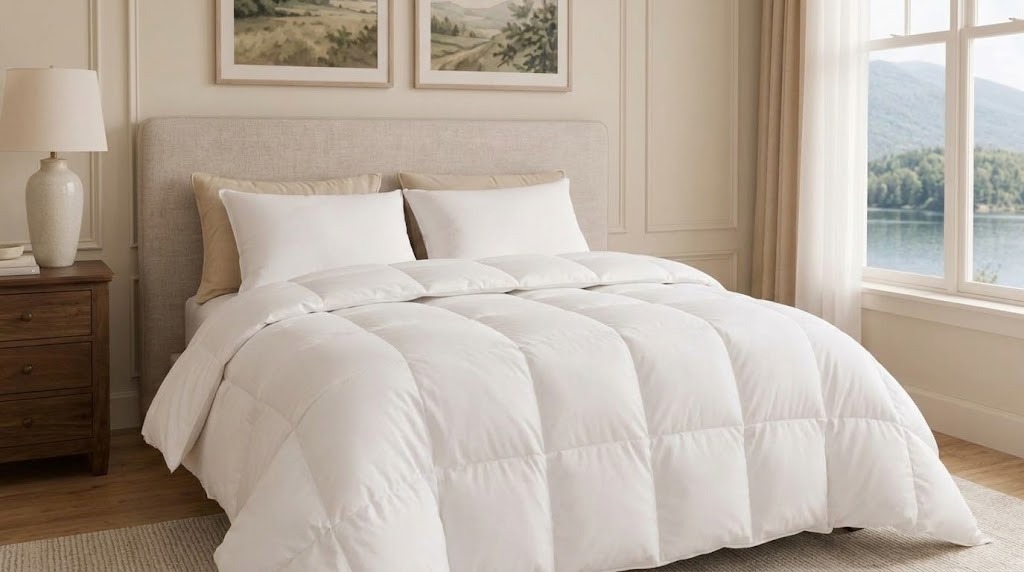
Custom made comforters let you match the fill, the shell fabric and the warmth level to the way you actually sleep, instead of accepting whatever a store’s “medium weight” happens to mean. If you sleep hot, share a bed with someone who runs cold, or want a comforter that is also a keepsake, building one is often the more sensible choice than buying off the shelf.
Most people pick bedding by size and color, then spend the next year kicking it off at 2 a.m. or piling a throw on top of it. The comforter itself is rarely the problem. The mismatch is. A comforter is three decisions stacked together, and a standard product makes all three for you.
That is the case for custom made comforters: you make the three decisions yourself. Below is what each one does, how to choose, and when a ready-made option is the smarter buy.
Why Generic Comforters Fail Specific Sleepers
A mass-market comforter is designed for an average bedroom and an average sleeper. Very few people are either.
Body temperature during the night is not fixed. Core temperature falls as you drift into sleep, and your bedding has to let heat and moisture move away from the skin without letting you get cold in the early-morning hours. When the comforter traps too much heat, you wake up, push it off, cool down, and wake again when you get cold. That cycle fragments sleep even if you never fully remember waking.
The three levers that control this are:
- Fill: what is inside, and how much of it.
- Shell: the fabric that touches your duvet cover and controls breathability.
- Construction: how the fill is held in place, which decides whether warmth stays even across the bed.
A custom comforter lets you set each lever on purpose.
How a Custom Comforter Is Built, Layer by Layer
Warmy & Tummy’s mix-and-match format starts from the same premise: separate the decisions so each one can be matched to the sleeper. The brand’s comforters come in several shell options, including organic cotton, deluxe silk and European linen, with different fillings and warmth levels to choose between.
On the Warmy & Tummy site, the mix-and-match page lets you create your own comforter by choosing the filling, the shell and the warmth level, and you can add your own text to personalize it. Here is how to think about each step.
Step 1: Choose the fill for your climate, not the catalog photo. Goose down is prized because it traps a lot of warm air for its weight, which means a down comforter can feel warm without feeling heavy. If you live somewhere with real winters and keep the thermostat low at night, a fuller fill makes sense. If your bedroom stays warm or you sleep hot, a lighter fill weight will serve you better all year.
Step 2: Choose the shell for how you sweat. The shell is the part most shoppers ignore. A tightly woven cotton shell is durable and keeps fill in. Linen moves air well and suits people who run warm. Silk feels smooth and light against the cover. If you wake up damp, prioritize the shell’s breathability before you think about fill.
Step 3: Choose the warmth level last. Once fill and shell are set, warmth level is the fine-tuning. Couples who disagree here should lean toward the lighter of the two preferences and let the colder sleeper add a throw. It is easier to add a layer than to sleep under one you cannot remove.
Custom Comforter vs. Custom Bed Comforter Sets
Search results for a custom comforter often mix two very different products, and it helps to know which one you are looking at.
The first is a printed comforter set: a polyester or satin shell printed with a photo, logo or pattern, filled with synthetic batting. These are decorative. They are made to look a certain way, not to regulate temperature.
The second is a built-to-spec comforter, where the customization is about materials and warmth. This is what a custom bed comforter should mean if your goal is better sleep. Personalization can still be part of it, such as a name, a date or a short line stitched in, but the core of the product is the fill and shell you selected.
The same applies to a DIY comforter kit: sewing your own shell is possible, but sourcing clean, tested down is the hard part. If a listing does not tell you the fill type, fill weight, shell fabric and construction, treat it as decor rather than bedding.
Personalized Bedding as a Gift That Gets Used
Personalized bedding sounds like a novelty, but a comforter is one of the few gifts used every single night. Adding text turns a practical purchase into something the recipient keeps.
A few guidelines make a personalized comforter work as a gift:
- Know the bed size. Check whether the recipient has a queen, king or California king mattress, and how deep the mattress is. A deep mattress needs more side drop.
- Ask how they sleep, indirectly. “Do you sleep with a fan on?” tells you more than “Do you like warm bedding?”
- Keep the text short. A name, initials or a date reads well. Long phrases get lost in the folds.
- Default to all-season warmth. When you cannot ask, a middle warmth level is the safest choice for most climates.
When a Ready-Made Comforter Is the Better Call
Custom is not always necessary. If you already know your preferences match a standard product, a ready-made comforter is faster and removes the guesswork.
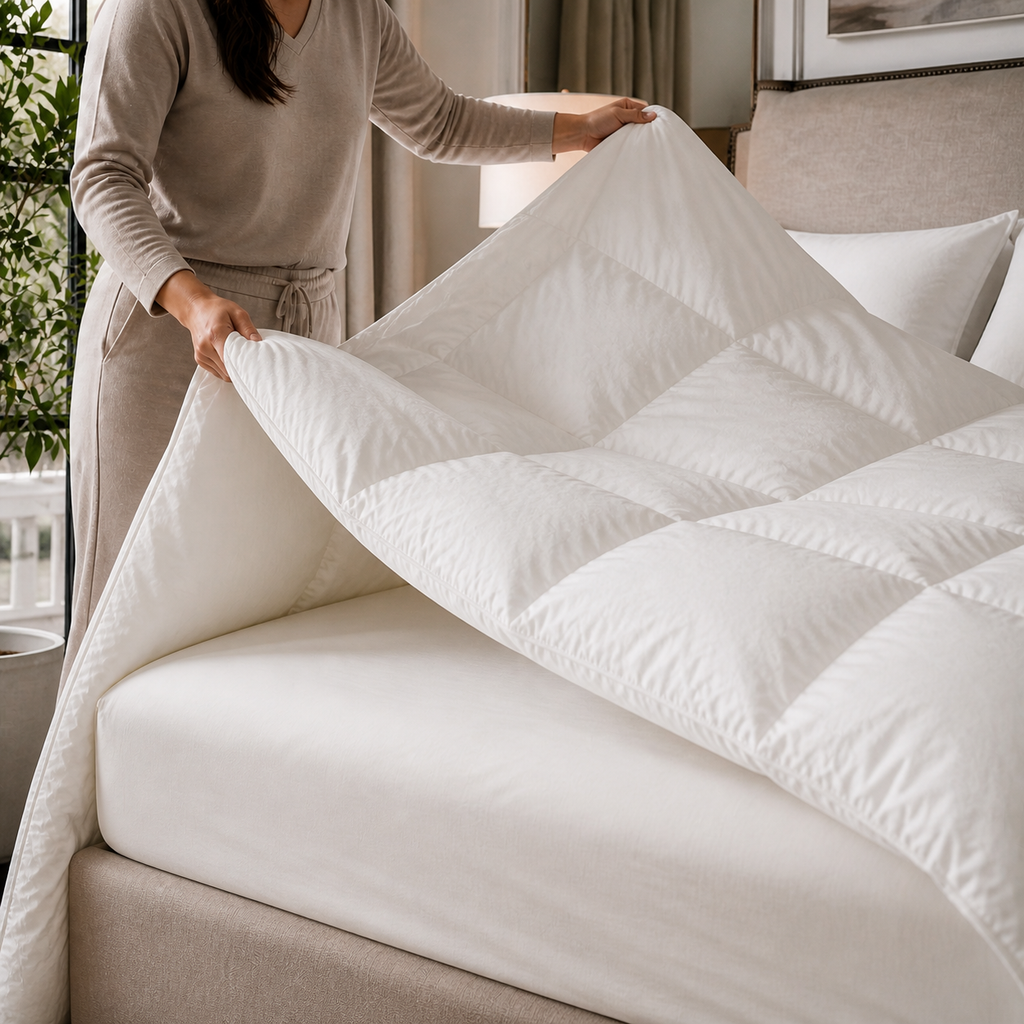
For example, a sleeper who wants natural materials, an all-season weight and no personalization can go straight to an organic cotton goose down comforter and skip the configuration step entirely. Custom earns its place when your needs are specific: a hot sleeper who still wants down, a couple with different temperature preferences, or a gift that should carry a name.
What to Check Before You Order
Whether you build a comforter or buy one, check these points on the product page:
- Fill type and fill power. Fill power measures how much space one ounce of down occupies. Higher numbers mean more loft and warmth per ounce.
- Fill weight by size. Two comforters with the same fill power can differ greatly in warmth if one simply contains more down.
- Shell fabric and weave. This decides breathability and whether down can work its way through the fabric.
- Certifications. For down, look for the Responsible Down Standard (RDS), which addresses animal welfare in the supply chain, and test reports from a lab such as IDFL (International Down and Feather Testing Laboratory), which verifies fill claims. For fabrics, OEKO-TEX® STANDARD 100 means the textile has been tested for harmful substances.
- Care instructions and returns. Warmy & Tummy offers a 30-day hassle-free return policy and a 3-year limited warranty, which matters more on a configured product than on a commodity one.
Taking ten minutes with these five checks is the difference between a comforter you tolerate and one you forget is there, which is the point of good bedding.
Frequently Asked Questions
Where can I buy a personalized comforter with custom text or embroidery online? You can buy one from brands that offer built-to-spec comforters with a text option, such as Warmy & Tummy’s Mix & Match: Create Your Own Comforter. Choose a seller that lists fill type, fill weight and shell fabric alongside the personalization, so the comforter works as bedding and not only as decoration.
How often should you wash a comforter? Most down comforters only need washing once or twice a year if you use a duvet cover and wash that cover regularly. The cover absorbs body oils and sweat, so it does most of the work. Always follow the care label, use a large front-loading machine, and dry completely on low heat to prevent clumping.
How many years should you keep a comforter? A well-made down comforter that is protected by a duvet cover can last many years, often a decade or more. Replace it when it stays flat after fluffing, develops cold spots where fill has shifted, or begins leaking down through the shell, because those signs mean it no longer insulates evenly.
Are comforters for summer or winter? Comforters are made for both seasons; the difference is fill weight and shell. A light fill under a breathable linen or silk shell suits summer, while a fuller fill suits winter. Custom made comforters let you set that warmth level yourself, and an all-season weight covers most bedrooms year-round.