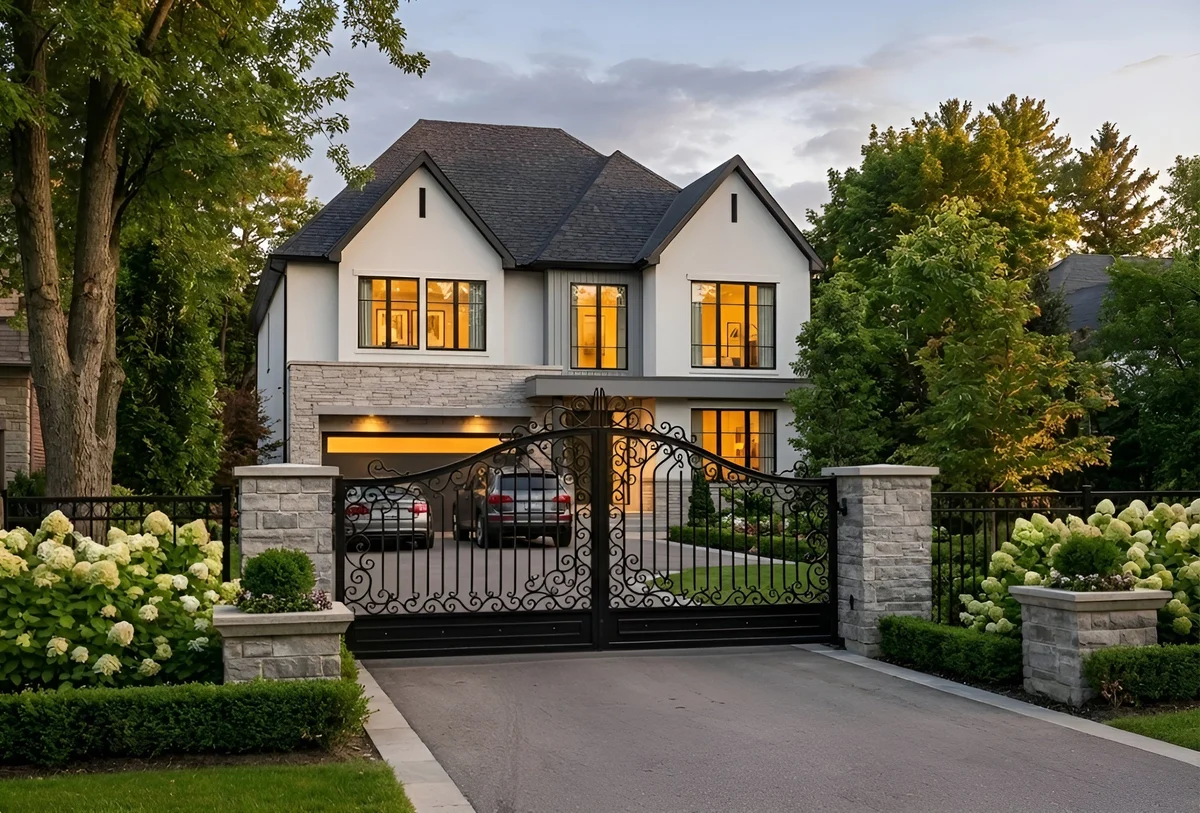
Seven Mistakes Homeowners Make When Planning a Driveway Gate
A driveway gate is a bigger commitment than it looks. It’s part fence, part machine, and part security system, and it gets used every time a car comes or goes. Most problems with gates don’t come from bad luck. They come from decisions made in the first planning conversation, long before any driveway gate installation begins. Avoid these seven common mistakes, and the gate is far more likely to open smoothly, stay secure, and look good for years.
Mistake 1: Measuring the Opening but Not the Vehicles
Homeowners usually measure the width of the driveway and stop there. The gate also has to suit the largest vehicle that will ever pass through: a moving truck, a delivery van, a boat trailer, an RV, or a fire engine. A gate that fits the family car perfectly but forces a tight turn for everything else becomes a daily frustration.
Consider turning radius as well. A gate set right at the street with no room to pull off the road means cars wait in traffic while it opens. Setting the gate back from the road gives a vehicle space to stop safely.
Mistake 2: Choosing a Swing Gate Without Checking the Slope
Swing gates are classic and often cheaper, but they need clear, fairly level ground across their entire arc. If the driveway rises toward the house, a gate swinging inward will hit the pavement. Many homeowners discover this only after the posts are set.
If the driveway slopes, consider:
- Swinging the gate outward, if there’s room and local rules allow it
- Using hinges designed to lift the gate as it opens
- Switching to a sliding gate that moves sideways
- Regrading or reshaping the apron in front of the gate
Mistake 3: Ignoring the Space a Sliding Gate Needs
Sliding gates solve slope and swing problems, but they need their own room. A sliding gate needs clear space along the fence line roughly as long as the opening itself, so it can roll out of the way. Trees, walls, utility boxes, and landscaping often block that path. Cantilever sliding gates also need extra length for their counterbalance section.
Before choosing a sliding gate, walk the fence line beside the opening and confirm there’s a clear, level run for it.
Mistake 4: Underbuilding the Posts and Frame
A driveway gate is heavy and wide, and it puts constant leverage on its posts. Standard fence posts can’t hold that load. Common results of underbuilding include sagging gates, latches that no longer line up, and posts that gradually lean toward the opening.
Durable gates rely on:
- Steel posts or oversized, reinforced posts set in deep footings
- Rigid steel or aluminum frames, even when the gate is clad in wood
- Diagonal bracing or truss designs on wide swing gates
- Heavy-duty hinges rated for the gate’s weight
Mistake 5: Deciding on Automation Too Late
Many homeowners install a manual gate and decide later that they want it automated. Retrofitting an opener is possible, but it’s often harder and more expensive than planning for it from the start. Power needs to reach the gate, usually through trenching for an electrical line, and the gate and posts must be strong enough for an operator.
Even if automation isn’t in the budget now, it’s worth running conduit for power and low-voltage wiring during installation and choosing a gate design compatible with an opener later.
Mistake 6: Overlooking Safety Features
Automated gates are powerful machines. Without proper safety devices, they can strike vehicles, pets, or people. Modern systems should include:
- Photo-eye sensors that stop or reverse the gate when something crosses its path
- Obstruction detection built into the operator
- Safety edges on the leading edge of the gate
- Manual release so the gate can be opened during a power outage
- Emergency access for fire and medical responders, such as a key switch or siren-activated opener where local rules require it
Pinch points between the gate and posts should also be guarded, especially in households with children.
Mistake 7: Forgetting Access Control and Daily Use
A gate is only as convenient as the way it opens. Think about everyone who needs access:
- Family members may use remotes, keypads, or smartphone apps.
- Guests and deliveries may need an intercom or a video call box.
- Service providers can be given temporary codes.
- Pedestrians often need a separate walk-through gate so the main gate doesn’t open for every visitor.
Placing keypads and call boxes within easy reach of a driver’s window, at a realistic height and distance, saves daily frustration.
Getting It Right the First Time
Every one of these mistakes is easier and cheaper to avoid at the planning stage than to fix afterward. Measure for the largest vehicles, match the gate type to the slope and available space, build posts and frames heavier than seems necessary, plan for automation and safety, and think through who needs to get in and how. A driveway gate planned that way works smoothly every day.